
The American presidency looks like absolute authority from the outside, but strict legal boundaries govern every hour of the job. You might imagine total executive freedom, yet federal statutes and security protocols strictly regulate their daily choices.
From mundane grocery bills to digital communications, legal safeguards ensure the executive branch never transforms into an unchecked monarchy. Even standard household routines face constant scrutiny under binding constitutional clauses and federal transparency standards.
These presidential restrictions reveal where commander-in-chief authority ends and strict public accountability begins. Here is the operational reality behind the surprising rules for US presidents that keep the modern executive office in check.

Viral Hit #1: The Lifetime Public Driving Ban
You cannot slide behind the wheel of a sports car once you take the oath of office. The U.S. Secret Service enforces an ironclad, lifetime ban that permanently forbids commanders-in-chief from driving on public roads.
This non-negotiable security protocol originated after the 1963 assassination of John F. Kennedy exposed severe motorcade vulnerabilities. Lyndon B. Johnson was the final sitting president permitted to operate an automobile on an open public highway.
If a president wants to steer a vehicle, they must retreat entirely to secured, private property. You will only catch them driving personal golf carts at Camp David or utility vehicles across private family ranches.
- Protocol origin: Enacted by the Secret Service following the 1963 assassination of John F. Kennedy.
- Last public driver: Lyndon B. Johnson was the last president allowed on public roads.
- Private property exception: Driving remains restricted to secluded compounds like Camp David or private family ranches.
- Post-tenure enforcement: The driving ban continues for life after leaving the Oval Office.

Viral Hit #2: Paying Out of Pocket for Groceries and Toiletries
Moving into the White House does not provide you with free culinary room service. While foreign state banquets are funded by public taxes, everyday family meals arrive with an itemized personal invoice.
The Chief Usher tallies every snack, family dinner, and tube of toothpaste used inside the private residence. At the end of each month, the First Family must personally reimburse the government for retail grocery costs.
Examining what presidents can’t do inside their own residence reveals that executive power stops at the dining room table. The president pays out of pocket for the hourly wages of off-duty waitstaff, servers, and evening cleanup crews.
- Itemized monthly bills: The Chief Usher bills the First Family for groceries, snacks, and dry cleaning.
- Private event staffing: Presidents pay hourly rates for servers and culinary staff at private parties.
- State event distinction: Taxpayers cover official diplomatic dinners, but zero personal family meals.
- Historical precedent: This billing standard has governed White House domestic life since the nineteenth century.

Viral Hit #3: The Strict $525 Foreign Gift Limit
Foreign royalty and global diplomats often arrive at bilateral summits bearing priceless jewels, tailored apparel, and bespoke timepieces. However, the Constitution’s Emoluments Clause and federal statutes prevent executive leaders from pocketing these treasures for personal gain.
Under the Foreign Gifts and Decorations Act, a president cannot personally retain gifts from foreign leaders exceeding $525. The General Services Administration periodically updates this minimal value threshold to reflect current economic inflation rates.
Any diplomatic present exceeding this $525 cap becomes the official property of the American public. If a president wishes to keep an exquisite artifact, they must pay the U.S. Treasury its full appraised market value.
- Statutory dollar threshold: The General Services Administration caps foreign gift retention at $525.
- Public ownership: All gifts exceeding the limit transfer directly to the National Archives.
- The buyback option: Leaders may buy back gifts by paying fair market value to the Treasury.
- Constitutional origin: Rooted in Article I, Section 9 to prevent foreign influence on executive policy.

Viral Hit #4: Sealed Windows and Forbidden Breezes
You can open your bedroom window whenever you desire fresh morning air, but a sitting president cannot. High-grade ballistic glass and specialized security seals keep the 132-room White House locked tight at all times.
Secret Service details strictly enforce this physical containment protocol across all residential quarters and the West Wing. Cracking a window open compromises perimeter security and exposes rooms to directional acoustic eavesdropping devices.
These protective White House rules guarantee personal security in an unpredictable modern media environment. The First Family relies on advanced, filtered ventilation systems or cleared outdoor walks through the gated Rose Garden instead.
- Ballistic protection: Reinforced bullet-resistant glass remains permanently sealed across all residential rooms.
- Acoustic security: Sealed windows prevent hostile foreign surveillance teams from intercepting laser audio reflections.
- Balcony restrictions: Stepping outside onto the Truman Balcony requires advance protective detail notice.
- Ventilation control: Specialized internal air filtering systems regulate all residential climate and oxygen flow.
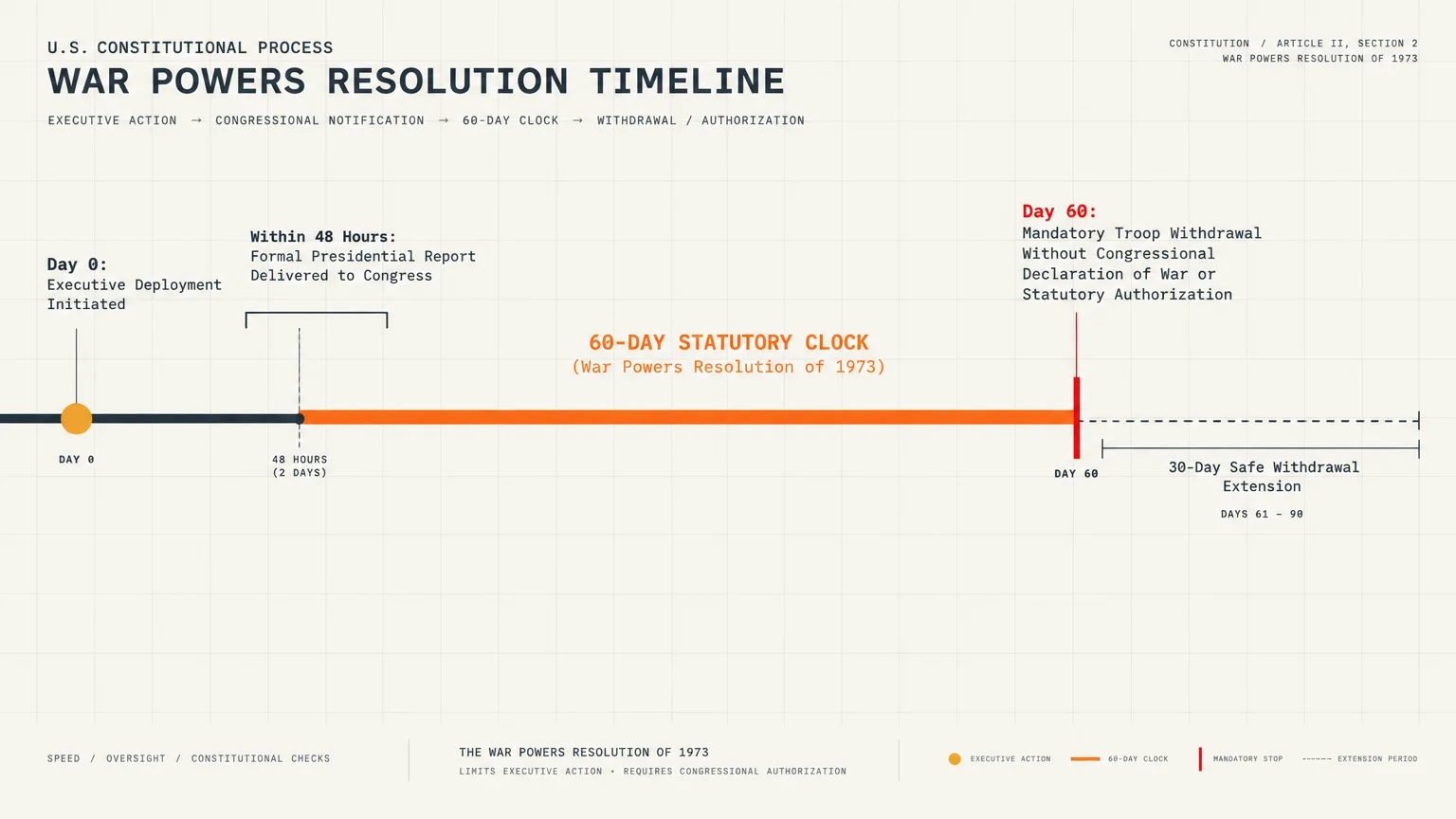
Viral Hit #5: The 60-Day War Powers Countdown
As commander-in-chief, the president commands the armed forces, but constitutional rules prevent unilateral, open-ended warfare. The U.S. Constitution awards the exclusive legal authority to declare war solely to the legislative branch.
Under the War Powers Resolution of 1973, the president must notify Congress within 48 hours of deploying combat troops abroad. This critical notification triggers a strict statutory clock designed to keep executive military power in check.
Analyzing these presidential powers limits clarifies how commander-in-chief authorities balance against congressional oversight. The statute allows a single 30-day extension, which applies solely to completing a safe, orderly troop withdrawal.
- 48-hour notification: The White House must submit a formal military report within two days of action.
- 60-day operational limit: Combat operations must terminate after two months without congressional approval.
- 30-day withdrawal window: Commanders may use an extra month exclusively for defensive troop extraction.
- Constitutional balance: Balances Article II military command with Article I legislative war-declaring authority.

Viral Hit #6: Complete Surrender of Personal Consumer Tech
You enjoy downloading popular social media apps and syncing wireless accessories, but presidents face extreme digital isolation. Commercial off-the-shelf electronics present dangerous vulnerabilities that state-sponsored cyber intelligence teams actively exploit.
The National Security Agency and White House Communications Agency thoroughly inspect and re-engineer every authorized device. Specialized technicians physically disable consumer microphones, external cameras, and unencrypted location transmitters before handing hardware to the president.
Presidents operate encrypted devices running stripped-down operating systems that block standard commercial app stores. You cannot casually message friends or browse unmonitored websites when your everyday digital footprint is a prime espionage target.
- Hardware modifications: The NSA strips commercial devices of vulnerable cameras, microphones, and GPS chips.
- App store lockdown: Presidents cannot download commercial apps, mobile games, or unapproved communication tools.
- Encrypted communication: All transmissions run through secured White House Communications Agency networks.
- Cyber target risk: Strict protocols prevent foreign adversaries from turning presidential hardware into surveillance bugs.
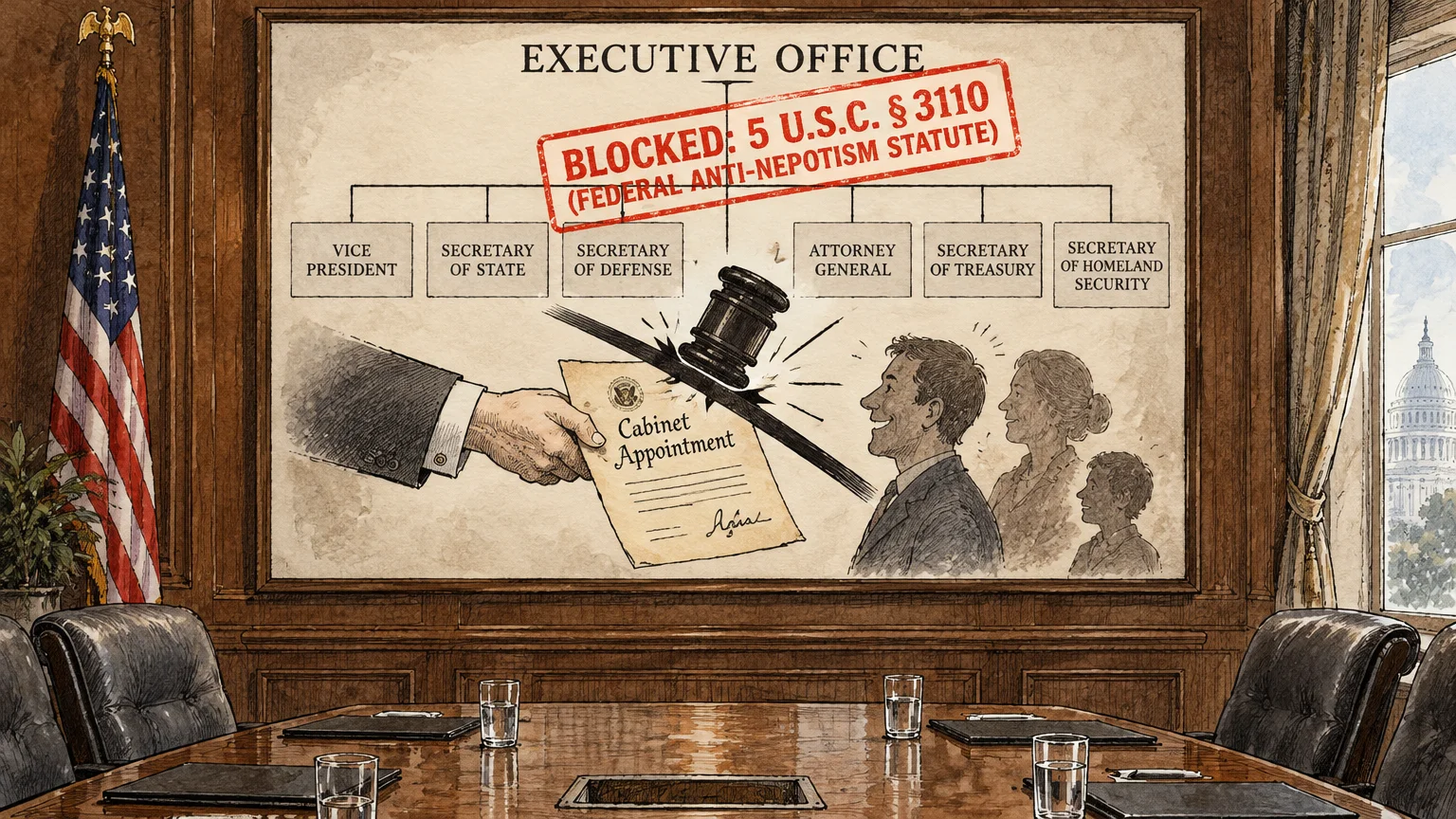
Viral Hit #7: The Strict Anti-Nepotism Ban
A newly elected president might want their most trusted family members running crucial federal departments. However, federal anti-nepotism statutes establish clear legal boundaries that prohibit turning executive leadership into a paid family business.
Congress passed the Federal Anti-Nepotism Statute of 1967 after John F. Kennedy appointed his brother Robert F. Kennedy as Attorney General. The statute legally bars presidents from naming immediate family to compensated federal agency posts.
This statutory restriction covers children, spouses, parents, siblings, and in-laws across all executive departments. While relatives may occasionally offer unpaid advisory input, they cannot hold statutory appointments or collect federal government paychecks.
- Statutory origin: Passed in 1967 following Robert F. Kennedy’s appointment as Attorney General.
- Prohibited appointments: Relatives cannot receive paid positions within executive departments or federal agencies.
- Broad family definition: The law covers children, spouses, siblings, parents, and immediate in-laws.
- Financial barrier: Relatives are legally blocked from receiving federal salaries or formal statutory titles.

Viral Hit #8: The Ban on Shredding or Deleting Records
You can clear your digital browsing history or shred private paperwork, but a president cannot delete history. Every official memo, policy draft, and electronic message belongs irrevocably to the citizens of the United States.
Under the Presidential Records Act of 1978, sitting executives are strictly barred from discarding or destroying official administrative communications. The law guarantees that historical decisions, diplomatic talks, and executive orders remain fully documented for public oversight.
Even informal handwritten notes must be cataloged, taped together if torn, and handed over to White House archivists. When an administration ends, every scrap of official paper transfers directly to the National Archives and Records Administration.
- Statutory mandate: Governed by the Presidential Records Act of 1978 (44 U.S.C. §§ 2201–2209).
- Public property rule: Official records belong to the American public, not to the individual president.
- Archival duty: The National Archives and Records Administration preserves and catalogs all records.
- Physical preservation: Discarded or torn working memos must be physically reconstructed by archivists.
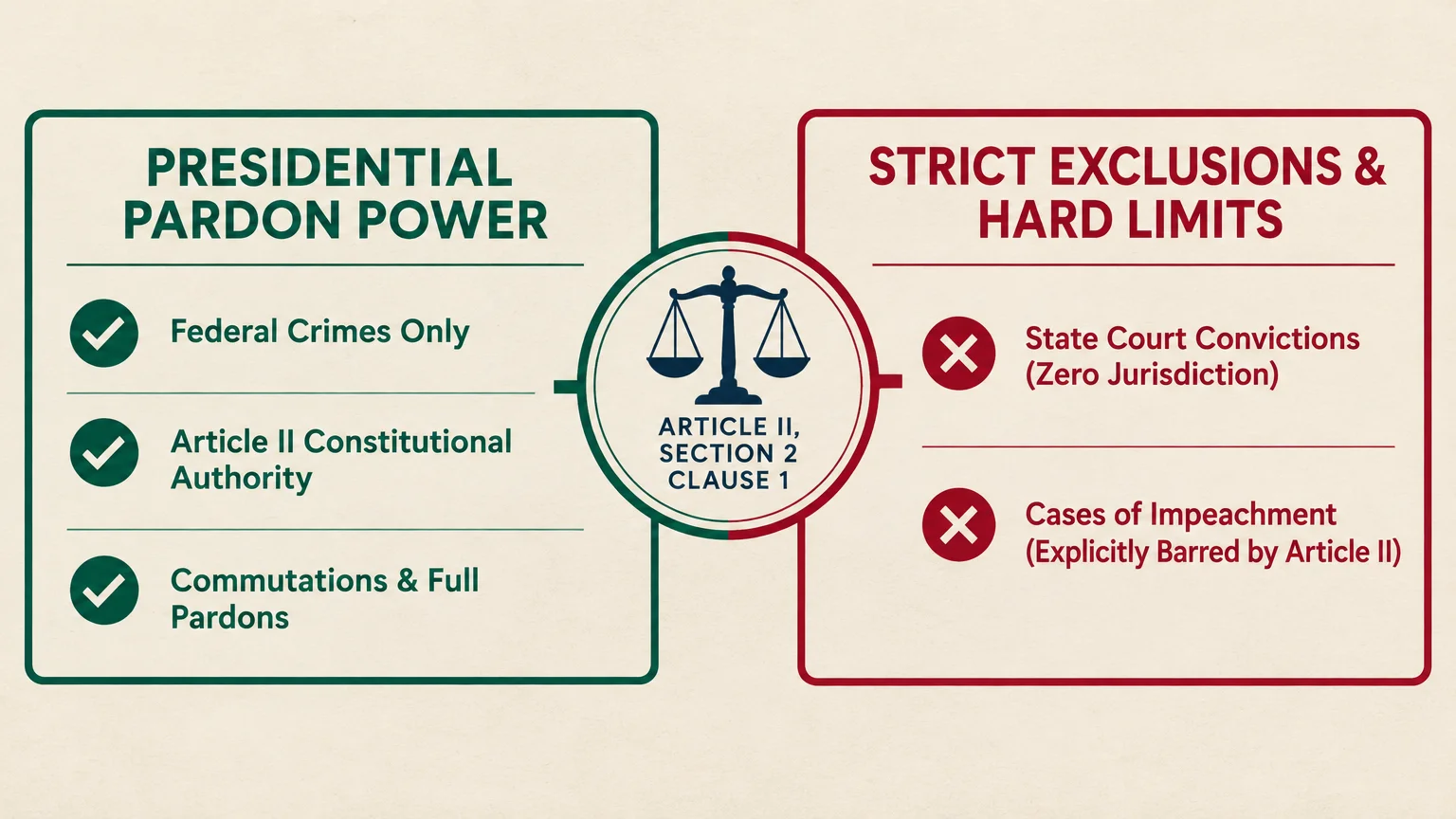
Viral Hit #9: No Pardons for State Crimes or Impeachment
The constitutional pardon power gives the executive wide clemency authority, yet strict boundaries limit this executive privilege. Article II of the Constitution restricts the president’s pardon power exclusively to federal offenses against the nation.
A sitting president has zero legal power to pardon individuals convicted of state-level crimes or local statutory offenses. State governors hold the exclusive constitutional authority to grant pardons or commute sentences within their individual state boundaries.
Furthermore, the Constitution explicitly bars the pardon power in cases involving congressional impeachment. A president cannot shield themselves, executive officials, or federal judges from legislative removal or future disqualification from office.
- Federal jurisdiction: Article II clemency applies strictly to federal crimes, leaving state law untouched.
- Governor authority: State governors maintain the exclusive power to pardon state criminal convictions.
- Impeachment exclusion: Clemency cannot reverse, stop, or soften congressional impeachment trials and penalties.
- Civil liability limits: Presidential pardons apply solely to criminal matters and cannot eliminate civil damages.
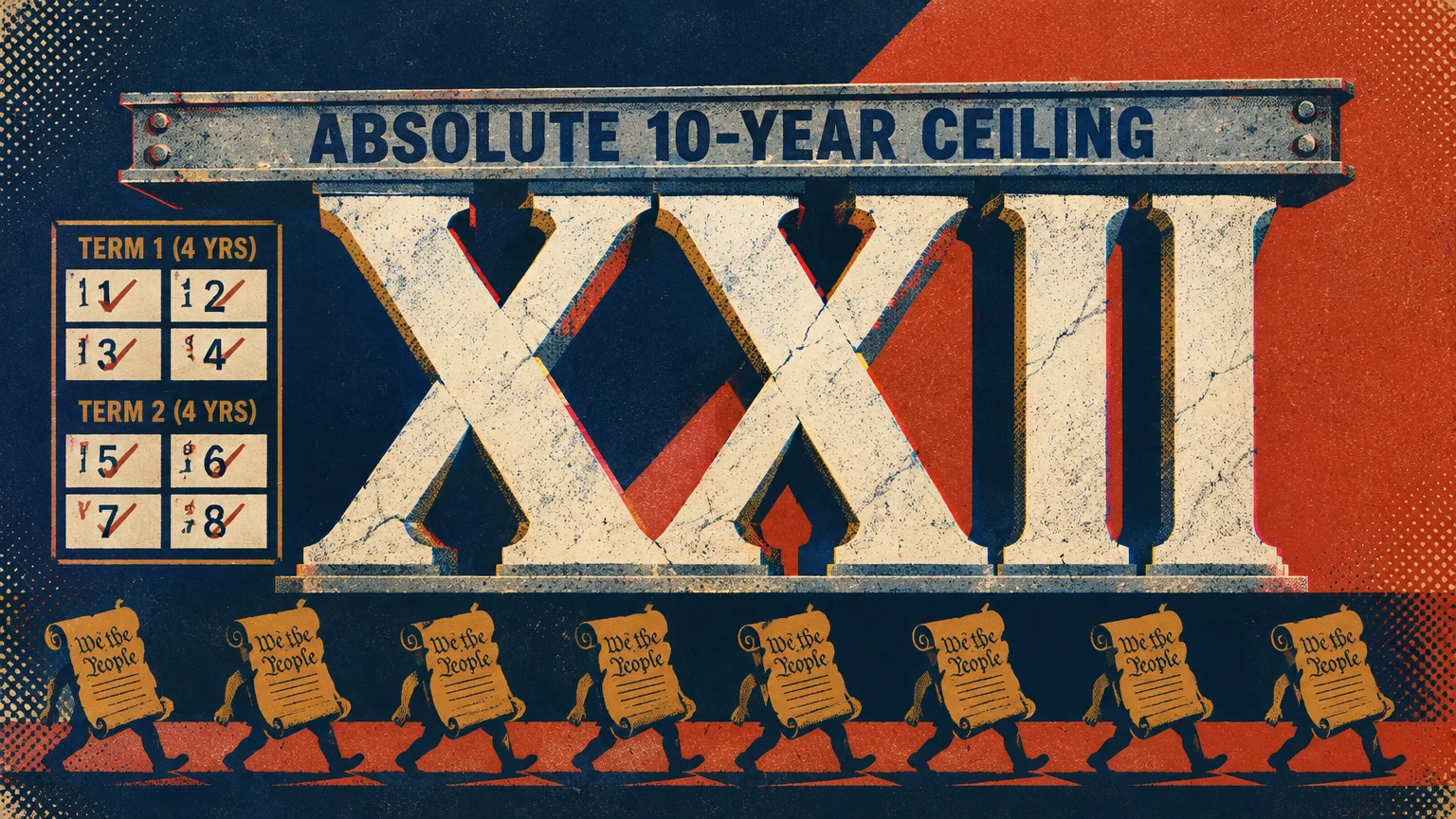
Viral Hit #10: The Two-Term and 10-Year Hard Ceiling
George Washington established an enduring two-term precedent that guided American governance for more than a century. However, Franklin D. Roosevelt’s election to four consecutive terms prompted Congress to write term limits directly into the Constitution.
Ratified on February 27, 1951, the 22nd Amendment prohibits anyone from being elected to the presidency more than twice. It also creates a strict, mandatory 10-year maximum cap for leaders who assume office through succession.
If a vice president assumes the presidency and serves over two years of another leader’s term, they can only be elected once. This mathematical safeguard ensures no single individual can consolidate executive power into an indefinite political tenure.
- Constitutional amendment: The 22nd Amendment was formally ratified on February 27, 1951.
- Two-term maximum: No person can be elected commander-in-chief more than two times.
- 10-year absolute ceiling: Successors serving over two years of a term can only win election once.
- Democratic protection: Prevents executive entrenchment and protects the peaceful rotation of political power.
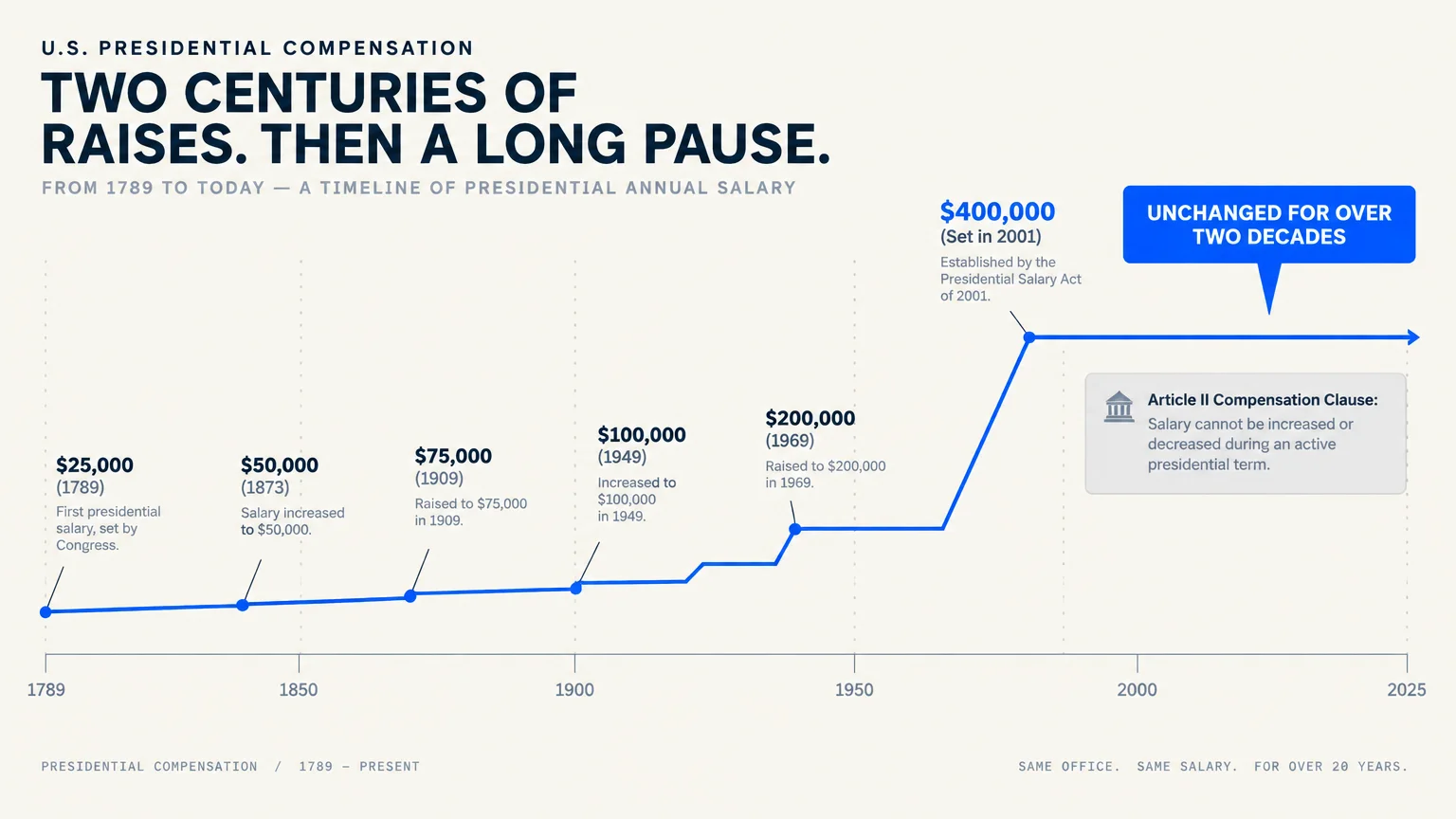
Viral Hit #11: The Frozen $400,000 Compensation Cap
Corporate leaders often receive lucrative performance incentives and equity packages, but the presidential compensation structure remains fixed. The U.S. Constitution strictly prohibits altering a president’s salary during their current four-year term in office.
Article II protects executive independence by ensuring Congress cannot slash presidential pay to influence executive decisions. At the same time, it prevents sitting presidents from pressuring legislators for immediate personal compensation increases.
Federal statute fixes the president’s annual salary at $400,000 per year, a rate that has remained unchanged since 2001. The compensation package also provides a non-taxable $50,000 annual expense allowance designated specifically for official public responsibilities.
- Statutory salary: Set at $400,000 per year under federal law (3 U.S.C. § 102).
- Constitutional freeze: Pay cannot be increased or decreased during an active four-year term.
- Last statutory update: Congress passed the current salary level in 1999, taking effect in 2001.
- Official allowance: Includes a $50,000 annual expense fund dedicated to official governmental duties.
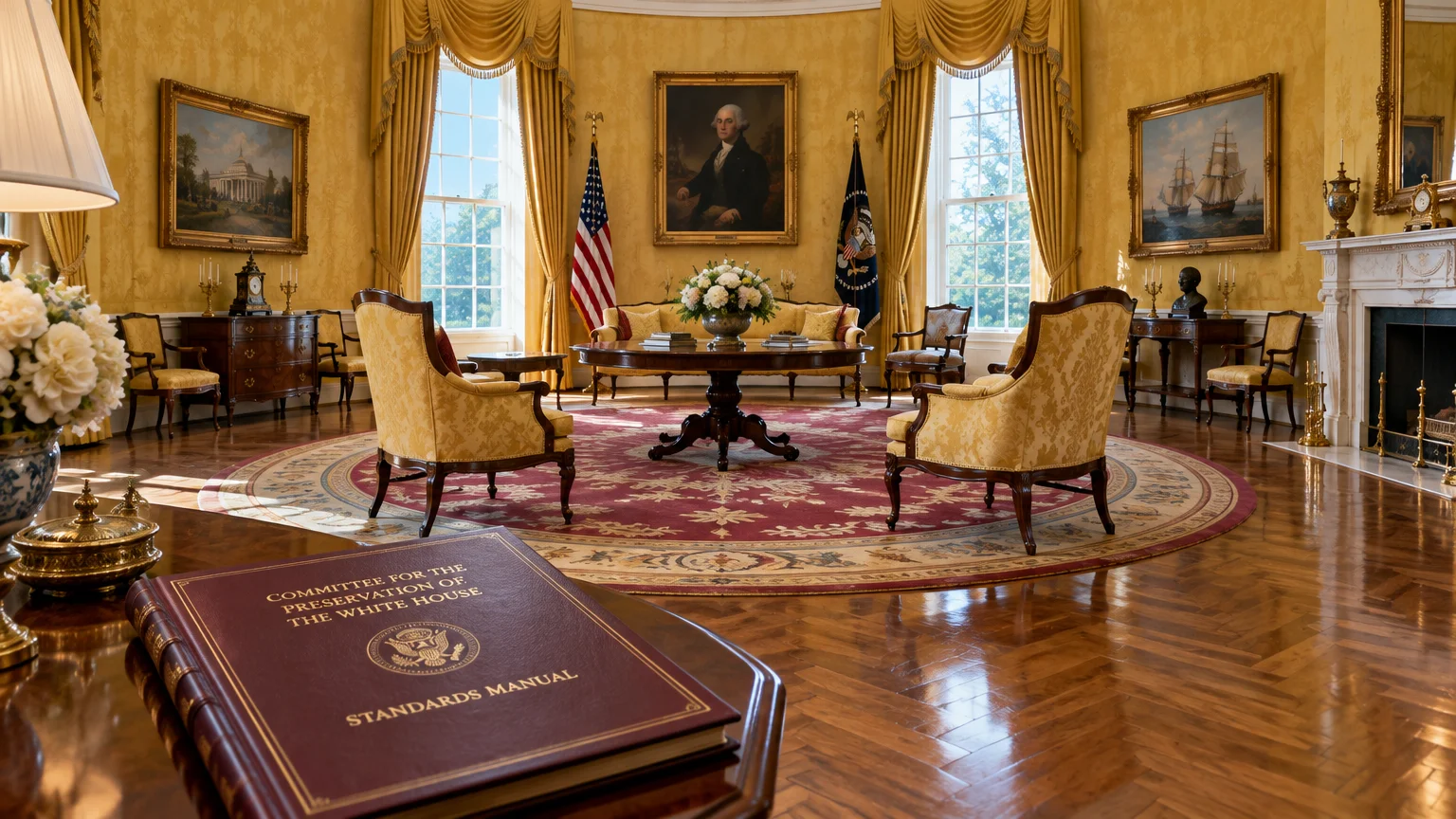
Viral Hit #12: Protected Walls and Untouchable Historic Rooms
Moving into a new residence usually means choosing custom paint colors, replacing carpeting, and tearing down outdated walls. However, the historic White House is a protected National Historic Landmark managed in partnership with the National Park Service.
The First Family can redecorate private residential rooms situated on the second and third floors as they please. In contrast, altering historic State Floor rooms requires formal consultation with the Committee for the Preservation of the White House.
Strict preservation rules protect historic rooms like the Lincoln Bedroom, Treaty Room, and State Dining Room from unauthorized architectural alterations. Historic artifacts, such as the 1797 Gilbert Stuart portrait of George Washington, must remain permanently on display.
- Preservation oversight: The Committee for the Preservation of the White House supervises all state rooms.
- Protected public rooms: State Dining Room, Lincoln Bedroom, and Treaty Room cannot be casually altered.
- Historic landmark status: The 132-room mansion operates under National Park Service preservation guidelines.
- Permanent art treasures: The 1797 Gilbert Stuart portrait rescued in 1814 is legally protected from removal.

Viral Hit #13: Returning Unused Official Expense Allowances
Corporate expense accounts sometimes allow executives to roll over leftover balances, but federal rules impose strict spending limits on presidents. Congress provides the president with a $50,000 annual expense allowance to cover official administrative and hospitality expenses.
Under federal statutory law (3 U.S.C. § 102), this official fund cannot be converted into personal income or diverted into private savings. The money exists exclusively to support official public duties and legitimate governmental engagements throughout the fiscal year.
Any portion of the $50,000 allowance left unspent at the conclusion of the year automatically reverts to the U.S. Treasury. This rule prevents executives from pocketing surplus taxpayer funds as an informal personal bonus.
- Statutory fund size: A non-taxable $50,000 annual allowance dedicated strictly to official public expenses.
- Mandatory reversion: Any unspent balance from the allowance legally returns to the U.S. Treasury.
- No personal conversion: Federal law explicitly prevents presidents from keeping unused expense funds as income.
- Strict audit trail: White House accountants document every transaction to ensure full fiscal compliance.
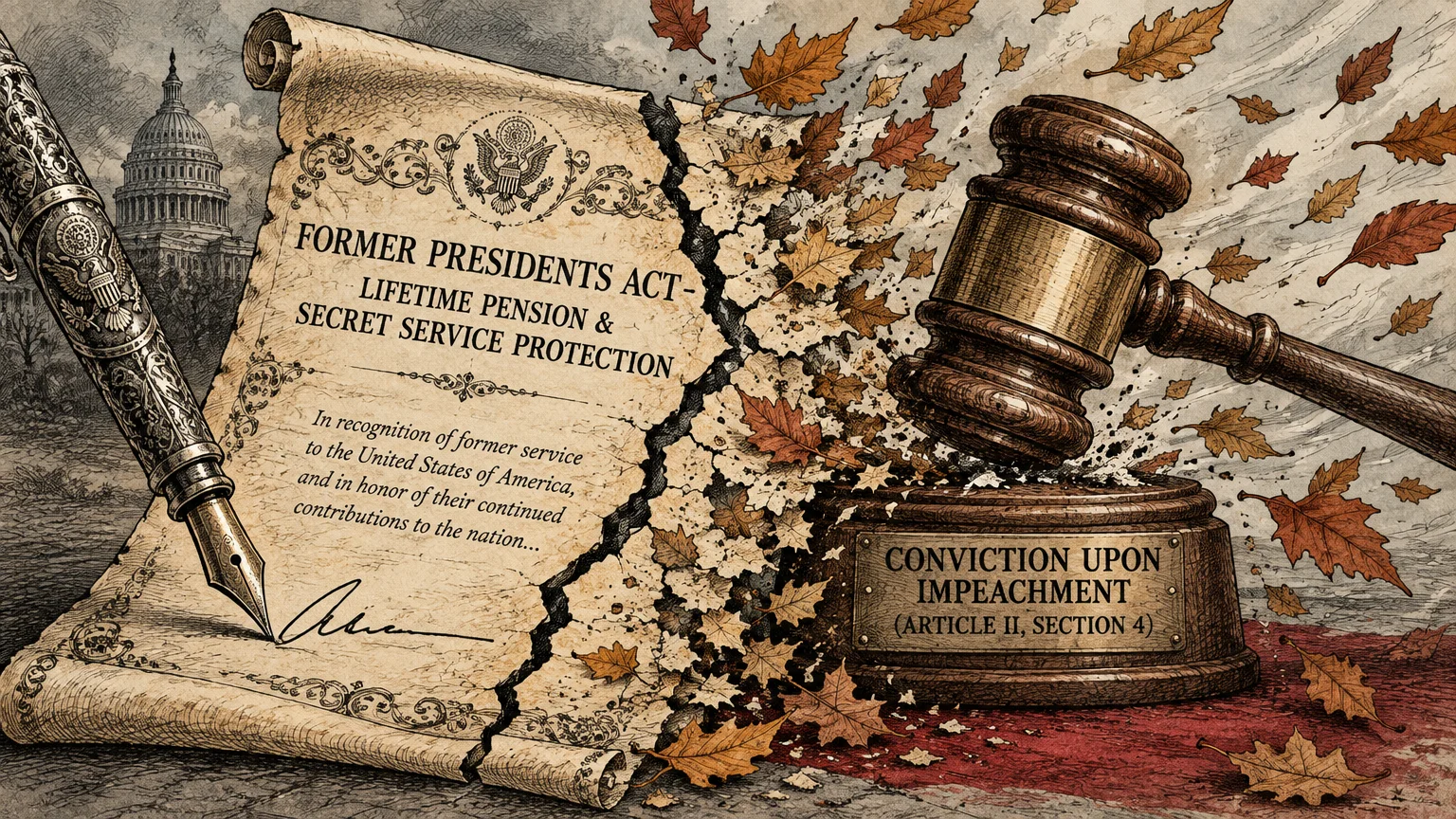
Viral Hit #14: Post-Presidency Pensions Lost to Impeachment Conviction
Retiring from the presidency typically unlocks generous taxpayer-funded perks, including staffed personal offices, secure travel funds, and permanent Secret Service protection. The Former Presidents Act of 1958 guarantees former commanders-in-chief an annual lifetime pension.
The Office of Personnel Management sets this annual pension rate at $253,100, matching the compensation of an Executive Schedule Level I Cabinet secretary. This lifetime benefit provides former leaders with continuous financial stability once their public service concludes.
However, this statutory pension carries an essential accountability trigger designed to safeguard the integrity of public service. A president convicted and removed by the Senate in an impeachment trial forfeits their pension and all post-presidential perks.
- Annual pension amount: The Office of Personnel Management sets the current pension at $253,100.
- Statutory authority: Governed by the Former Presidents Act of 1958 to support post-tenure public life.
- Forfeiture consequence: Senate conviction in an impeachment trial permanently terminates all pension rights.
- Lost privileges: Convicted presidents forfeit federally funded office space, staff allowances, and pension payments.

Keep the Buzz Going: How to Share Responsibly
Viral political trivia spreads quickly across feeds, but sensational claims often distort actual legal limits. Taking a few seconds to double-check statutory citations prevents the spread of misinformation online.
When you share political facts, cite primary documents like the U.S. Constitution and federal codes. Crediting reputable legal analysts and fact-checkers elevates digital conversations across social media platforms.
Healthy democratic debate relies on civility, shared truth, and respect for established institutional norms. Approaching political discussions with curiosity rather than outrage helps communities stay informed and engaged.
For verified reporting and fact-checking, rely on outlets like Reuters and rumor-busting sites such as Snopes. For platform policy updates, follow official resources like the Google Transparency Report.
Frequently Asked Questions
Do presidential restrictions remain permanent across different administrations?
Statutory restrictions and constitutional provisions remain legally binding regardless of which political party wins an election. Overturning these rules requires acts of Congress, constitutional amendments, or definitive federal court rulings.
How do presidential powers limits compare to European governance models?
European parliamentary democracies distribute executive authority between a ceremonial head of state and an elected prime minister. This dual-executive arrangement divides power differently than the American system, which places both roles within one office.
Can digital creators monetize commentary explaining White House rules?
Content creators can freely monetize educational analyses, social explainers, and political commentary across modern digital networks. You should cite original public records and adhere to platform community guidelines to maintain credibility and audience trust.
Do strict transparency laws ever compromise personal presidential security?
Security agencies coordinate closely with national archivists to guarantee that public records releases never jeopardize human safety. Highly sensitive tactical logs and cryptographic blueprints receive formal security classifications before archivists evaluate them for eventual release.
Disclaimer: Viral stories evolve quickly. Always verify details with primary sources before sharing or acting on this content.







Leave a Reply