
Celebrities routinely trade red carpet flashbulbs for high-stakes political campaigns, transforming pop-culture visibility into genuine public power. When household names seek public office, their celebrity political careers ignite fierce debate over public trust and policy expertise.
You see this transition reshaping ballots across the globe, from local city councils to national presidential palaces. Fame grants aspiring leaders instant name recognition, but voter scrutiny demands real governance skills.
Understanding how actors turned politicians navigate this shift helps you separate polished media performances from authentic public service. Here is how some of the most famous people in politics successfully captured both attention and authority.
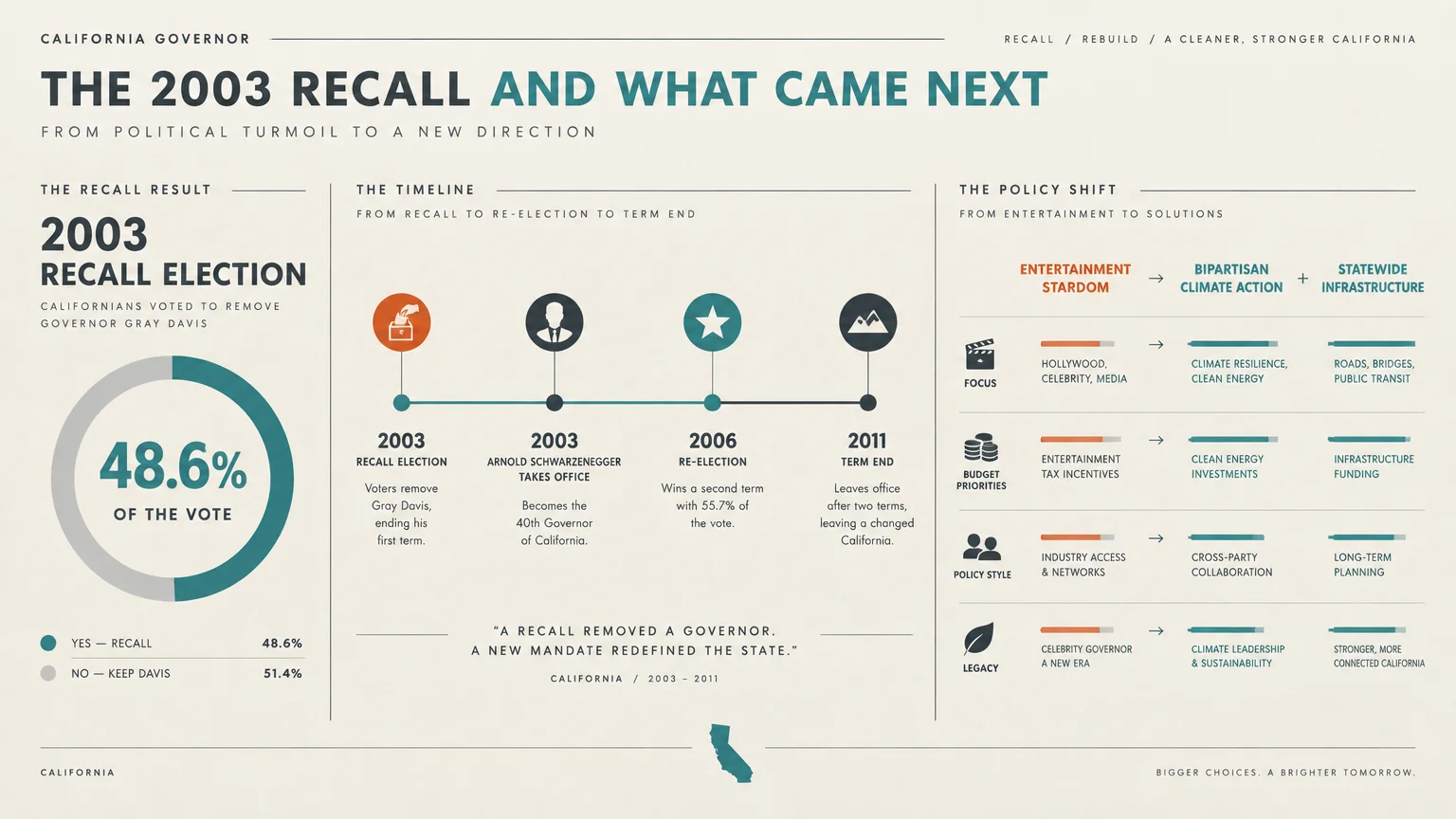
Viral Hit #1: Arnold Schwarzenegger – From Action Icon to the Governator
Arnold Schwarzenegger redefined modern political ambition when he pivoted from Hollywood blockbuster action roles to the California statehouse. His sudden entry into frontline government proved that global stardom can disrupt traditional electoral machinery.
Schwarzenegger bypassed standard party ladders by leveraging charisma, universal recognition, and an optimistic economic message. He treated campaign stops like movie premieres, commanding live news coverage without spending millions on standard advertising.
The bodybuilding champion won California’s historic special recall election in 2003 with 48.6% of the vote. Voters reaffirmed their confidence three years later by re-electing him in 2006, keeping him in office from 2003 to 2011.
- Won the historic 2003 California gubernatorial recall election with 48.6% of the vote.
- Served two terms as governor between 2003 and 2011 after securing re-election in 2006.
- Championed landmark bipartisan environmental regulations and sweeping statewide infrastructure programs.
During his tenure, Schwarzenegger championed bipartisan climate action and signed historic emissions legislation. He demonstrated that celebrity politicians can bridge partisan divides when they anchor their initiatives in pragmatic, future-focused policies.
You should examine his strategic shift from hyper-masculine entertainment hero to pragmatic civil leader. He adapted his language to address fiscal accountability, proving that successful transitions require substantial policy evolution.
If you evaluate a candidate with a Hollywood background, assess their ability to build broad coalitions. Schwarzenegger succeeded because he refused rigid dogmatism and hired seasoned policy veterans to staff his administration.
Stardom will get candidates on the evening news, but only disciplined teamwork secures lasting legislative results. Watch whether celebrity contenders build real policy infrastructure or merely chase camera flashes.

Viral Hit #2: Volodymyr Zelenskyy – From Satirical Sitcom to Wartime Leader
Volodymyr Zelenskyy accomplished one of the most surreal transitions in modern statecraft. He went from playing an accidental head of state on television to governing a nation through historic turbulence.
In 2015, Zelenskyy starred in the hit television series Servant of the People, playing a high school teacher whose anti-corruption rant propels him to the presidency. Audiences across Ukraine embraced the fictional satire as a blueprint for real reform.
Zelenskyy transformed fiction into reality when he was officially sworn in as the sixth President of Ukraine on May 20, 2019. His campaign bypassed traditional political rallies in favor of viral digital videos and comedic stage performances.
- Premiered his political satire show Servant of the People in 2015.
- Sworn in as the sixth President of Ukraine on May 20, 2019.
- Remained in office past May 2024 under constitutional martial law rules during the Russian invasion.
Although his original five-year term was scheduled to conclude in May 2024, constitutional martial law regulations suspended scheduled wartime elections during the ongoing war with Russia. He adapted his media expertise to rally worldwide military and humanitarian support.
Zelenskyy delivers direct, unvarnished video addresses filmed on handheld smartphones from war-torn streets. His communication mastery demonstrates how modern leaders deploy digital storytelling to unite international alliances during severe geopolitical crises.
You can learn valuable lessons about modern crisis leadership by watching his media strategy. He engages global audiences directly, stripping away bureaucratic stiffness in favor of raw emotional clarity and moral resolve.
When analyzing famous people in politics, observe whether their communication style fosters public resilience or merely amplifies self-promotion. Zelenskyy turned theatrical delivery into an indispensable diplomatic weapon.
Viral Hit #3: Donald Trump – Reality TV Star Turned Two-Time Commander-in-Chief
Donald Trump revolutionized modern political discourse by channeling reality television spectacle directly into the executive branch. His trajectory illustrates how established media brands can reshape the highest political offices on Earth.
Long before entering electoral politics, Trump spent decades building commercial name recognition as a real estate developer and media personality. He hosted The Apprentice, transforming his boardroom persona into an iconic symbol of executive authority.
Trump captured the presidency in 2016 and served as the 45th President from 2017 to 2021. After mounting an aggressive comeback bid, he won the November 5, 2024 presidential election to become the 47th President.
- Built global television fame as the host of the reality franchise The Apprentice.
- Served as the 45th President of the United States from 2017 to 2021.
- Won the historic November 5, 2024 presidential election to serve as the 47th President.
Trump bypassed legacy press channels by speaking directly to supporters through daily social media posts and massive stadium rallies. This direct-to-consumer political communication rewrote the playbook for modern campaigning.
You witness how entertainment techniques can fundamentally alter legislative expectations and voter loyalty. Trump proved that commanding the news cycle daily matters more in modern politics than traditional ground-game spending.
Examine how your favorite political commentators react to rapid-fire media saturation. When evaluating celebrity political careers, pay close attention to whether populist rhetoric aligns with measurable constitutional and economic outcomes.
Never confuse media dominance with uncontested consensus. The Trump era proves that celebrity politicians evoke intense devotion from supporters while driving equally potent mobilization among political opponents.
Viral Hit #4: Ronald Reagan – The Silver Screen Star Who Reshaped the Presidency
Ronald Reagan established the gold standard for actors turned politicians in the twentieth century. He translated Hollywood charm into two terms in the White House, permanently altering American conservatism.
Before entering government, Reagan starred in over 50 Hollywood films and refined his leadership skills as president of the Screen Actors Guild across seven terms between 1947 and 1960. Union negotiations taught him tactical bargaining and coalition management.
Reagan served two terms as Governor of California from 1967 to 1975, proving his executive competence before a nationwide audience. He then served two terms as the 40th U.S. President from 1981 to 1989.
- Starred in more than 50 Hollywood films before entering electoral politics.
- Served seven terms as President of the Screen Actors Guild between 1947 and 1960.
- Governed California from 1967 to 1975 and served as U.S. President from 1981 to 1989.
Dubbed the Great Communicator, Reagan used television broadcasts to explain complex economic agendas directly to everyday citizens. His Hollywood training allowed him to project unwavering optimism, calm authority, and patriotic confidence.
You should recognize that Reagan built his political career over decades of deliberate public advocacy rather than overnight viral fame. He toured factories, delivered policy speeches, and studied conservative philosophy extensively before running for high office.
When you evaluate celebrity candidates today, check their long-term ideological grounding. Reagan succeeded because he paired theatrical performance with deeply held convictions and decades of disciplined civic involvement.
Charisma elevates a message, but enduring political legacies require concrete ideological coherence. Demand that famous aspirants show their work long before asking for your vote.
Viral Hit #5: Jesse Ventura – The Pro Wrestler Who Body-Slammed State Politics
Jesse Ventura shattered the two-party monopoly when he transitioned from professional wrestling rings and Hollywood sets to the governor’s mansion. His victory proved that anti-establishment candidates can upend deeply entrenched electoral machines.
Ventura built a colorful public persona as a flamboyant WWE Hall of Fame wrestler and action film co-star in Predator. He first entered civic leadership by serving as Mayor of Brooklyn Park, Minnesota, from 1991 to 1995.
Running on a third-party reform ticket, Ventura shocked political pundits by winning the Minnesota gubernatorial election in 1998. He served as the state’s chief executive from 1999 to 2003, championing budget surpluses and transit expansion.
- Inducted into the WWE Hall of Fame after a celebrated professional wrestling career.
- Served as Mayor of Brooklyn Park, Minnesota, between 1991 and 1995.
- Won the Minnesota governorship as a third-party candidate, serving from 1999 to 2003.
Ventura governed with a plain-spoken, confrontational style that resonated with voters exhausted by conventional partisan posturing. He leveraged free media coverage and youth voter turnout to defeat well-funded establishment rivals.
You can draw clear parallels between Ventura’s 1998 campaign and modern digital populist movements. He demonstrated that voters often prioritize perceived authenticity and plain speaking over polished political résumés.
When assessing third-party or insurgent celebrity politicians, evaluate how effectively they collaborate with existing legislative chambers. Ventura faced persistent gridlock because he lacked an organized party caucus to sponsor his legislative initiatives.
Outsider status can win an election, but passing sustainable laws requires legislative alliances. Look beyond theatrical defiance to see if a candidate can actually negotiate with skeptical lawmakers.
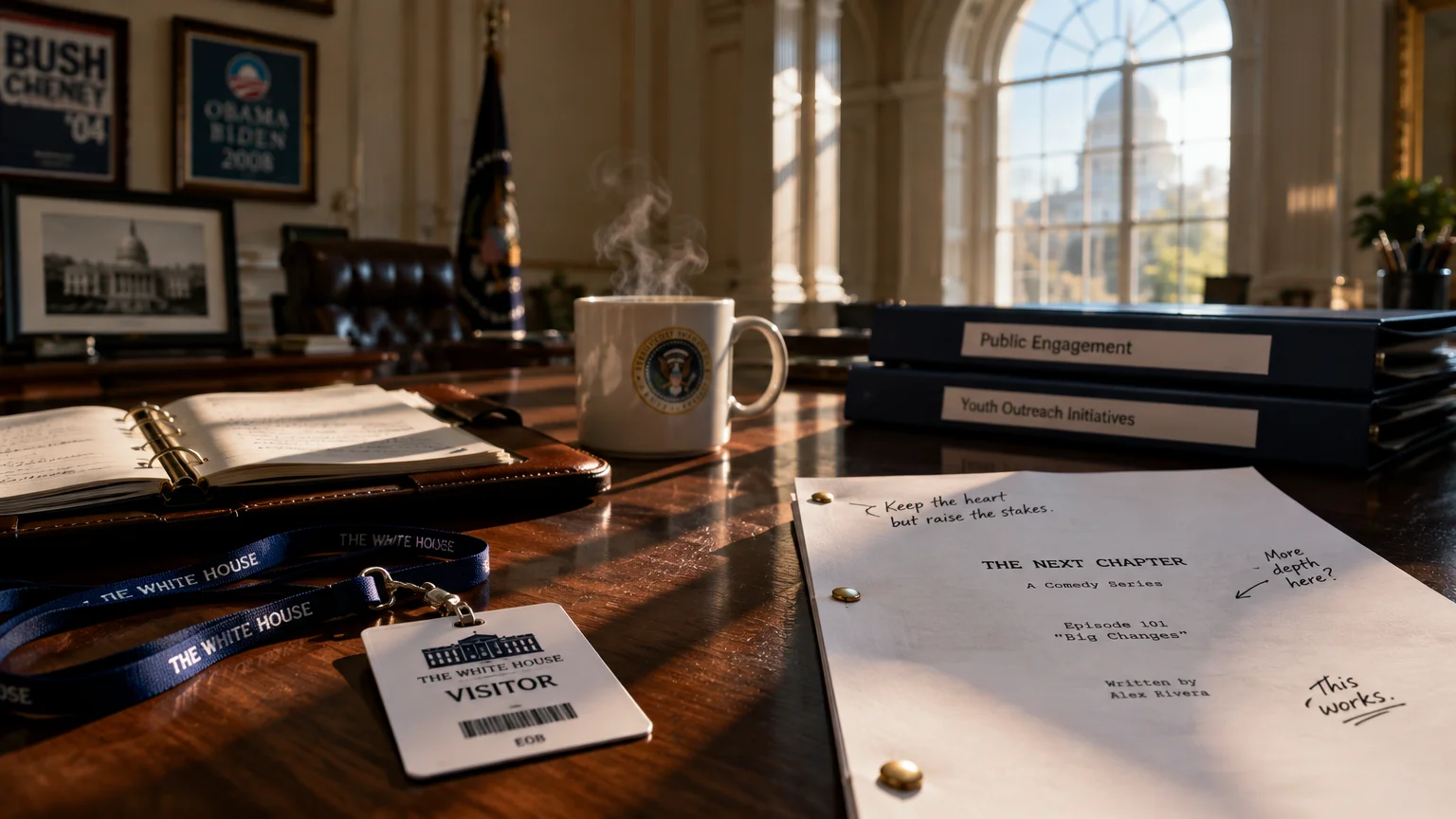
Viral Hit #6: Kal Penn – Leaving Hollywood Comedy for the West Wing
Kal Penn surprised Hollywood by stepping away from lucrative television contracts to work behind the scenes in public administration. His career highlights an alternate path for famous people in politics who prefer policy over personal campaigns.
Penn achieved global fame starring in the cult comedy franchise Harold & Kumar and playing Dr. Lawrence Kutner on the medical drama House. At the peak of his career, he voluntarily paused acting to serve the public.
Penn accepted a formal appointment during the Obama administration, serving as an Associate Director in the White House Office of Public Engagement from 2009 to 2011. He focused on youth outreach, arts communities, and Asian American civic initiatives.
- Paused successful acting roles in Harold & Kumar and House to enter public service.
- Served as Associate Director in the White House Office of Public Engagement from 2009 to 2011.
- Focused on mobilizing young voters and building relationships with Asian American and arts organizations.
Instead of running for elective office, Penn immersed himself in administrative grind, community roundtables, and policy liaisons. His choice demonstrated genuine dedication to civic duty rather than personal political aggrandizement.
You can appreciate how Penn navigated public life without exploiting his celebrity for votes. He utilized his platform to demystify executive policy for younger voters who felt alienated by traditional government messaging.
Consider his journey when evaluating celebrity involvement in public causes. Real impact often occurs behind bureaucratic desks, away from campaign rallies and sensational headlines.
True civic leadership requires rolling up your sleeves and mastering policy details. Penn showed that celebrities can contribute meaningfully to governance without ever appearing on a ballot.

Viral Hit #7: Shirley Temple Black – Child Stardom to Diplomatic Trailblazer
Shirley Temple Black proved that childhood box-office idolatry can evolve into distinguished, high-stakes international diplomacy. She reinvented herself as a skilled stateswoman during critical moments of the twentieth century.
As a 1930s child prodigy, Temple lifted the spirits of millions during the Great Depression. As an adult, however, she rejected Hollywood vanity to study foreign affairs and master international relations.
President Gerald Ford appointed her U.S. Ambassador to Ghana, where she served from 1974 to 1976. President George H.W. Bush later named her U.S. Ambassador to Czechoslovakia, where she served from 1989 to 1992.
- Captured worldwide fame as the defining Hollywood child star of the 1930s.
- Served as United States Ambassador to Ghana between 1974 and 1976.
- Served as United States Ambassador to Czechoslovakia during the Velvet Revolution from 1989 to 1992.
In Prague, Black witnessed the Velvet Revolution firsthand and championed peaceful democratic transitions across Eastern Europe. Diplomatic peers praised her meticulous preparation, poise, and deep understanding of foreign protocol.
You can draw inspiration from her ability to overcome patronizing public expectations. Skeptics originally dismissed her diplomatic appointments, yet her disciplined expertise won the enduring respect of career foreign service officers.
When you see celebrities in politics taking on appointed diplomatic roles, demand rigorous competence over ceremonial flair. Black set the benchmark by immersing herself in cultural study and complex bilateral negotiations.
Reinvention requires discipline, patience, and humility. Black demonstrated that dedication to international service can completely eclipse the celebrity persona of one’s youth.

Viral Hit #8: Sonny Bono – Chart-Topping Pop Singer to Capitol Hill Lawmaker
Sonny Bono transitioned from music industry fame and television comedy to pragmatic municipal and federal lawmaking. His journey began with frustrating local bureaucratic red tape and ended in the halls of Congress.
Bono gained international stardom alongside Cher with multi-platinum pop hits and an Emmy-nominated variety show. Frustrated by local building permits while opening an Italian restaurant, he decided to fix local regulations himself.
Bono ran for Mayor of Palm Springs, California, serving successfully from 1988 to 1992. In 1994, he won election to the U.S. House of Representatives as a Republican, serving from 1995 until his tragic death in January 1998.
- Rose to global musical fame as half of the legendary pop duo Sonny & Cher.
- Served as Mayor of Palm Springs, California, from 1988 to 1992.
- Served as a Republican member of the U.S. House of Representatives from 1995 to January 1998.
In Washington, Bono disarmed political rivals with self-deprecating humor and sharp practical instincts. He spearheaded major environmental preservation measures for the Salton Sea and championed intellectual property rights for musical creators.
You can observe how personal entrepreneurial frustration can motivate celebrities to pursue real electoral change. Bono never pretended to be an intellectual theorist, preferring common-sense negotiation and relatable communication.
If you watch candidates seeking local office, see whether they understand the direct, practical headaches of regular citizens. Bono’s local mayoral record gave him the credibility required to thrive on Capitol Hill.
Relatability remains a potent political asset when paired with authentic community concern. Bono proved that humility and self-awareness can turn pop culture notoriety into serious legislative accomplishments.

Viral Hit #9: Spencer Pratt – Reality TV Infamy Meets Local Governance
Spencer Pratt brought twenty-first-century influencer culture directly to municipal campaigning. His bid demonstrated how reality television personalities convert viral notoriety into headline-grabbing civic activism.
Pratt became famous as a dramatic villain on the reality show The Hills. Decades later, personal catastrophe altered his trajectory after he lost his home in the devastating January 2025 Palisades Fire.
On January 7, 2026, Pratt officially announced his candidacy for Mayor of Los Angeles, campaigning on fire safety and urban accountability. He finished third in the June 2026 primary with 25.5% of the vote.
- Gained widespread notoriety as a reality television personality on MTV’s The Hills.
- Announced his candidacy for Mayor of Los Angeles on January 7, 2026, following the January 2025 Palisades Fire.
- Captured 25.5% of the vote in the June 2026 primary election, finishing third.
Although Pratt did not advance to the general election, his double-digit primary showing shocked political analysts across California. He bypassed expensive television consultants by livestreaming daily critiques of emergency response protocols directly to his followers.
You see how modern influencer metrics can disrupt local party endorsements. Pratt mobilized disillusioned residents who felt ignored by established city officials, converting digital outrage into primary ballot support.
When evaluating viral political bids on social media, distinguish between temporary outrage and workable municipal policy. A quarter of primary voters backed Pratt, demonstrating significant public hunger for disruptive voices.
Stunts grab attention on social feeds, but running large metropolitan governments demands comprehensive administrative roadmaps. Treat influencer campaigns as urgent warning signals to traditional leaders rather than quick political panaceas.
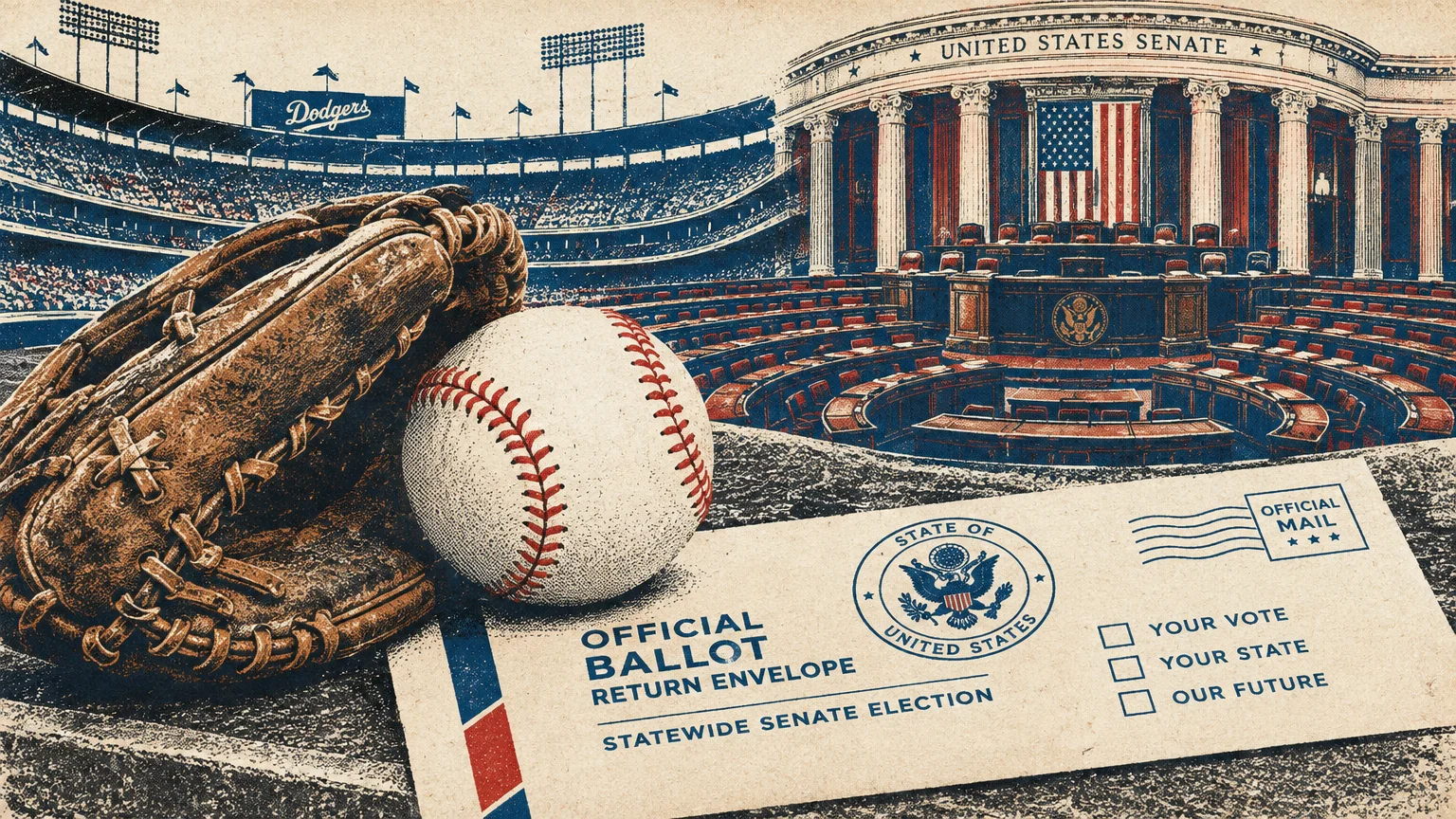
Viral Hit #10: Steve Garvey – From Baseball Hero to the Senate Ballot
Steve Garvey leveraged athletic stardom and multi-generational nostalgia to mount one of the highest-profile statewide campaigns of recent election cycles. His Senate run underscored how beloved sports figures leverage goodwill into political capital.
Garvey earned legendary status across California as an All-Star first baseman for both the Los Angeles Dodgers and San Diego Padres. Decades after hanging up his cleats, he entered the arena of national politics.
Running as a Republican for California’s open U.S. Senate seat, Garvey advanced through a crowded nonpartisan primary to the general election. On November 5, 2024, he secured 41.1% of the vote, totaling 6,312,594 ballots.
- Won a World Series title and multiple All-Star honors with the Los Angeles Dodgers and San Diego Padres.
- Advanced through California’s competitive top-two nonpartisan Senate primary in 2024.
- Won 41.1% of the general election vote on November 5, 2024, tallying 6,312,594 ballots against Adam Schiff’s 58.9%.
Although Democrat Adam Schiff won the seat with 58.9% of the vote, Garvey demonstrated surprising strength across rural and suburban districts. His campaign relied heavily on personal appearances, sports analogies, and appeals to family values.
You can see how athletic heroics provide instant brand trust that traditional political operatives spend millions attempting to construct. Fans who watched Garvey play felt an immediate, nostalgic emotional bond that crossed traditional political lines.
Notice how partisan demographics ultimately set hard boundaries for celebrity candidates in deeply polarized states. Stardom helps candidates consolidate their party base, but overcoming heavy voter registration deficits requires complex policy persuasion.
Charismatic athletes can command huge vote totals, but they must articulate detailed legislative platforms to sway undecided voters. Use athletic candidates as an opportunity to demand clear policy commitments before casting your ballot.
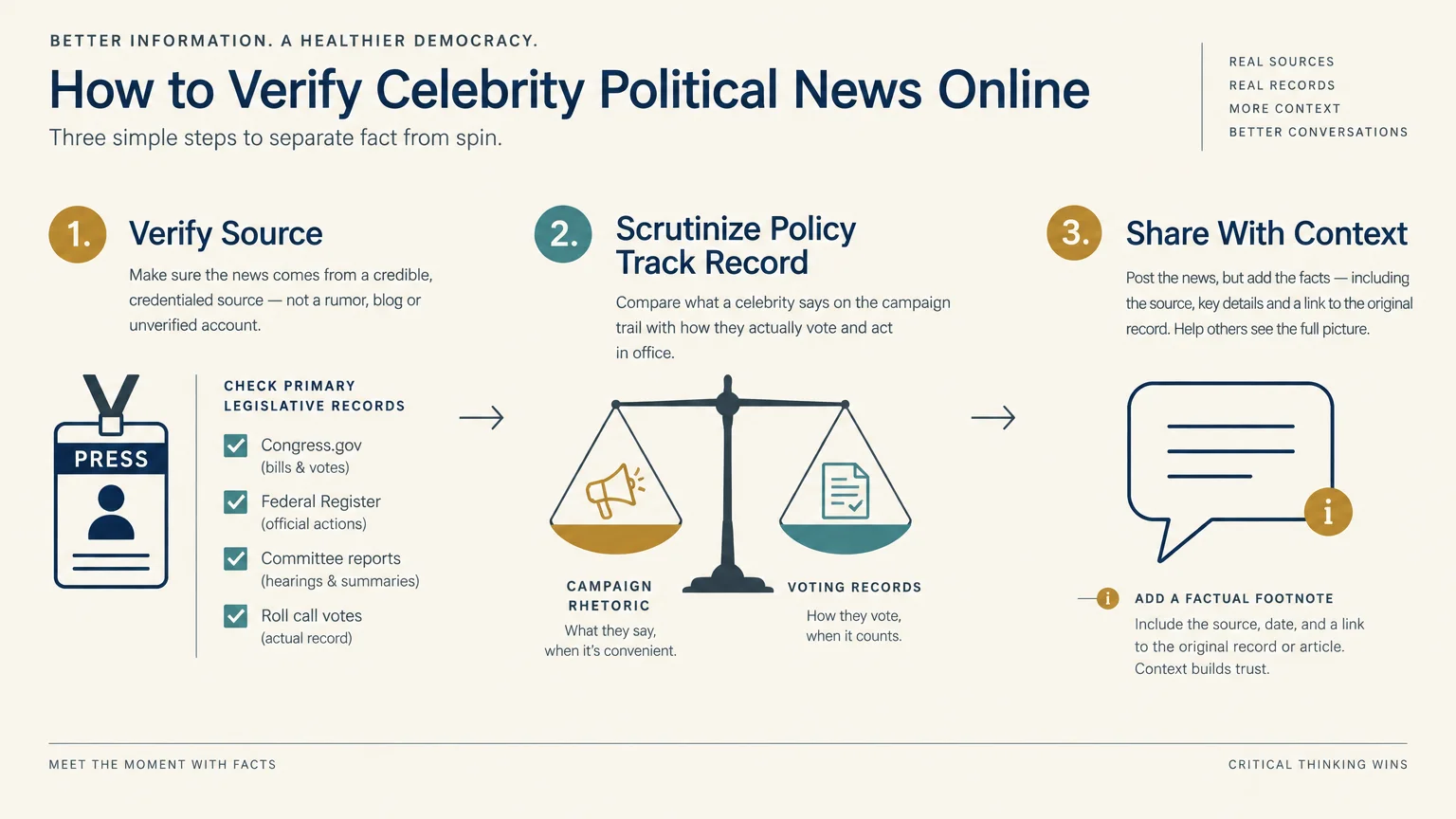
Keep the Buzz Going: How to Share Responsibly
Celebrity campaigns generate viral memes, heated debates, and sensational headlines across digital feeds. You must actively verify claims before sharing political gossip or unvetted campaign videos on your social accounts.
Misleading soundbites and altered video clips often exaggerate candidate statements to drive outrage and emotional engagement. Always look for full-length press conferences or primary source transcripts before passing judgment on public figures.
For verified reporting and fact-checking, rely on outlets like Reuters and rumor-busting sites such as Snopes. For platform policy updates, follow official resources like the Google Transparency Report.
Credit original reporters, local journalists, and digital content creators whenever you reshare campaign breakdowns or election analyses. Highlighting authentic sourcing rewards thorough reporting and elevates constructive public dialogue across social platforms.
Maintain basic civility during online debates, even when discussing polarizing figures or contentious campaign issues. Thoughtful questions and evidence-based arguments foster healthy democratic discourse far better than personal insults.
Frequently Asked Questions
How long do celebrity political careers typically last compared to traditional politicians?
Celebrity political careers vary dramatically depending on whether the candidate treats public service as a sustained mission or a temporary branding stunt. Leaders like Ronald Reagan built decades-long careers, while others return to private entertainment after single terms.
Long-term survival requires mastering legislative compromise and policy execution. Without institutional dedication, initial fame quickly wears off under persistent legislative gridlock.
Why do European and American voters react differently to celebrity politicians?
American political systems frequently reward individual media personalities due to candidate-centric primary elections and direct-to-voter television appeals. European democracies often emphasize rigid party discipline and programmatic party lists, making unilateral celebrity incursions rarer outside of specialized populist movements.
However, digital media channels continue to blur these regional distinctions across the Atlantic. European voters increasingly support charismatic communicators who leverage social platforms to challenge traditional political hierarchies.
How do creator rights and digital monetization affect modern celebrity campaigns?
Campaign finance laws strictly regulate how public figures monetize content, gather online donations, and protect creative assets during active candidacies. Modern celebrity politicians must establish transparent firewalls between their commercial ventures, personal podcasts, and official election fundraising accounts.
Failure to separate entertainment revenue from political operations triggers severe regulatory penalties and public scrutiny. Transparent compliance protects both creator integrity and voter confidence.
What safety concerns arise when famous people enter volatile political races?
Celebrities already attract intense public scrutiny, but political campaigns introduce hostile partisan vitriol and credible security challenges. High-profile candidates require extensive private security infrastructure and coordination with law enforcement agencies to protect rallies and public appearances.
You should evaluate how political figures de-escalate tension and protect community members at their public gatherings. Responsible leaders prioritize public safety over inflammatory rhetoric that could endanger supporters or critics.
Disclaimer: Viral stories evolve quickly. Always verify details with primary sources before sharing or acting on this content.








Leave a Reply