
You can trace the entire trajectory of modern democracy through split-second twists of presidential history. A sudden turn of the head or a jammed trigger can instantly reshape global politics.
While American history records four presidents who did not survive targeted violence, dozens of brush-with-death encounters altered world events just as dramatically. These stories reveal how razor-thin margins preserve executive power.
From nineteenth-century duels to dramatic modern close calls, discover the pivotal moments that changed history. Here is your definitive guide to the leaders who survived ambush and the four who fell.
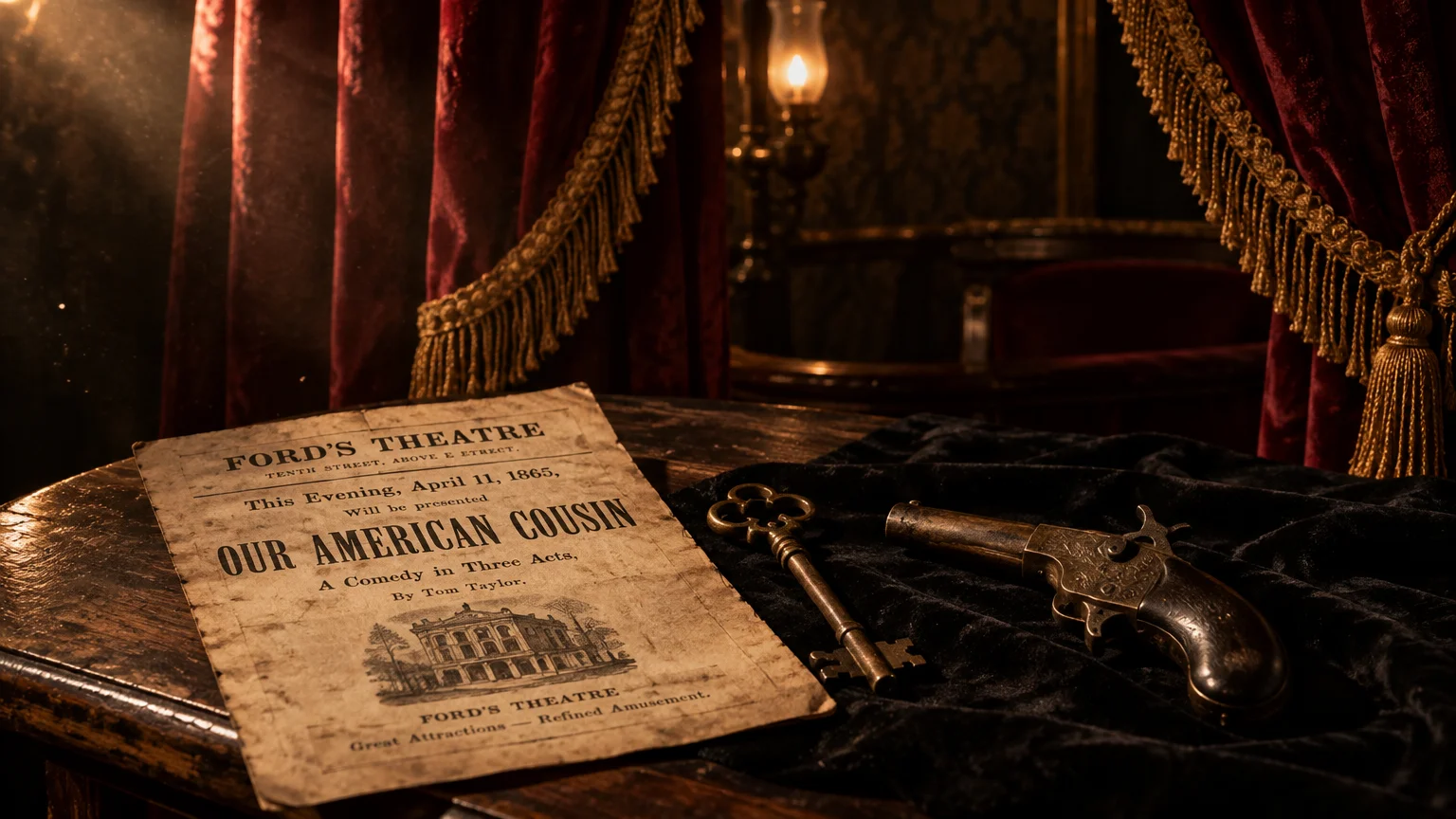
Viral Hit #1: Abraham Lincoln and the Ford’s Theatre Conspiracy
You know Abraham Lincoln as the leader who preserved the Union, but his assassination on April 14, 1865, remains America’s most seismic political murder. The Civil War had just ended when John Wilkes Booth slipped into Ford’s Theatre.
Booth wielded a .44-caliber Derringer pistol and fired directly into the back of Lincoln’s head during a comedic performance. Lincoln died the following morning on April 15, 1865, plunging an exhausted nation into profound grief.
Booth did not act alone; he led a wider plot targeting Vice President Andrew Johnson and Secretary of State William Seward. A chaotic twelve-day manhunt followed through Maryland and Virginia.
Union soldier Boston Corbett tracked Booth to a Virginia tobacco barn on April 26, 1865, fatally shooting the assassin. The shocking attack shattered postwar reconciliation plans and altered civil rights enforcement for decades.
You can still see Lincoln’s bloodstained garments and Booth’s tiny weapon preserved inside Ford’s Theatre National Historic Site. The tragedy proved that an open executive branch left commanders-in-chief utterly vulnerable.
- Date and Location: April 14, 1865, at Ford’s Theatre in Washington, D.C.
- Assailant: Actor and Confederate sympathizer John Wilkes Booth.
- Weapon Used: A single-shot .44-caliber Derringer pocket pistol.
- Historical Aftermath: Lincoln’s death elevated Andrew Johnson, triggering bitter legislative battles over Southern Reconstruction.
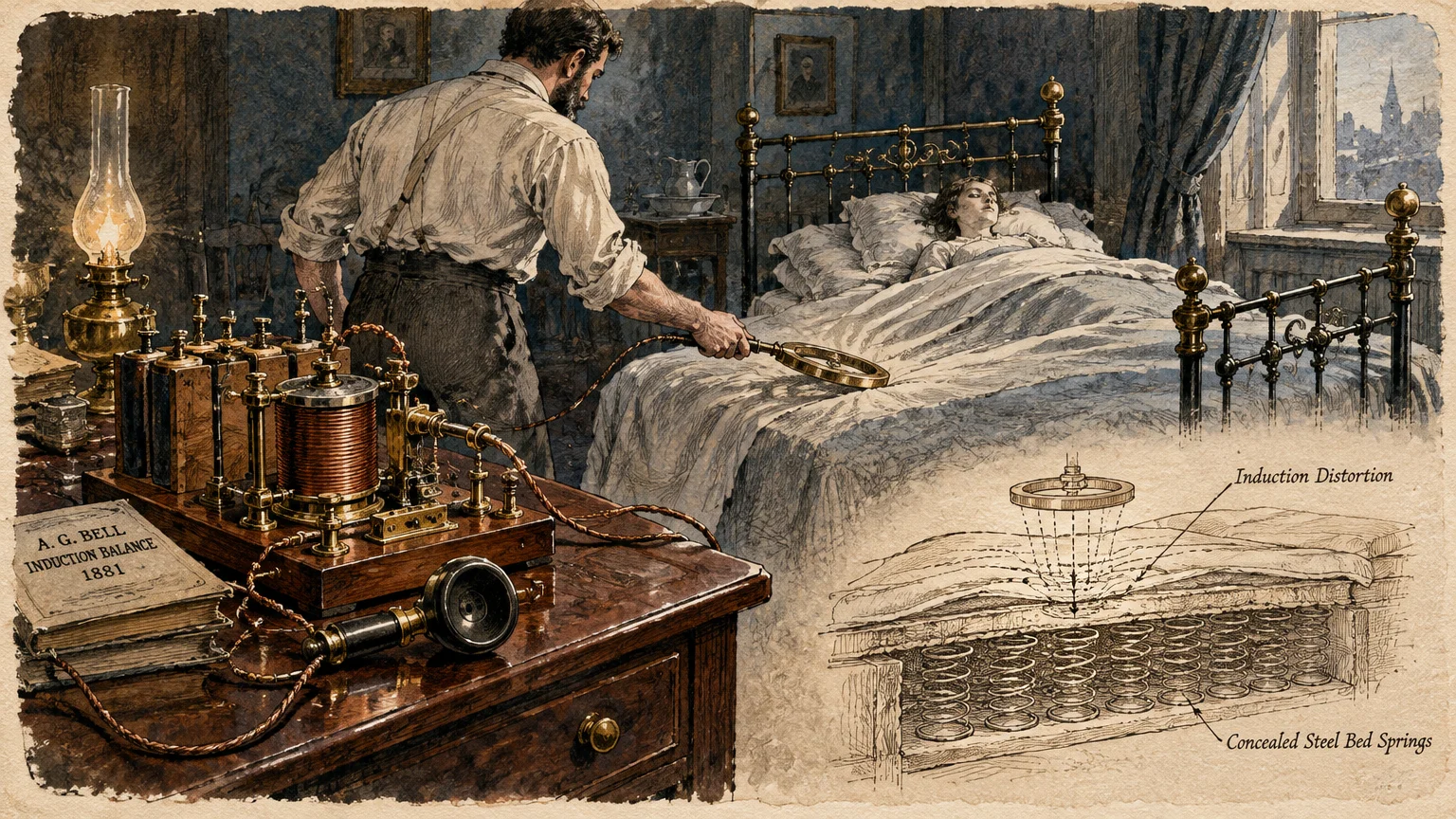
Viral Hit #2: James A. Garfield and the Fatal Medical Blunder
You might assume every assassinated president died immediately from an attacker’s bullets, but James A. Garfield fought for his life for eleven weeks. On July 2, 1881, disgruntled lawyer Charles J. Guiteau ambushed Garfield at a Washington train station.
Guiteau felt entitled to a consulship in Paris and shot the president twice at the Baltimore and Potomac Railroad Station. One bullet grazed Garfield’s arm, while the other lodged deep behind his pancreas.
Garfield actually survived the gunshots, yet Victorian medical practices proved lethal. Doctors repeatedly probed the wound with unsterilized fingers and unwashed metal instruments, introducing devastating systemic infections.
Even telephone inventor Alexander Graham Bell attempted to locate the missing bullet using an experimental metal detector. Bell failed because Garfield lay on an innovative steel-spring mattress that scrambled the detector’s magnetic readings.
Garfield finally died of severe sepsis and internal hemorrhage on September 19, 1881, after 79 agonizing days. Authorities subsequently hanged Guiteau on June 30, 1882, cementing the tragedy as a monument to political mania.
You can trace modern hospital sterilization standards and the death of political patronage directly back to Garfield’s tragic treatment. His demise forced Congress to dismantle the corrupt spoils system.
- Date and Location: July 2, 1881, in Washington, D.C.
- Attacker: Delusional political office-seeker Charles J. Guiteau.
- Lethal Cause: Severe septicemia caused by unsterilized medical treatment rather than the bullet itself.
- Policy Legacy: The 1883 Pendleton Civil Service Reform Act, which ended federal patronage appointments.
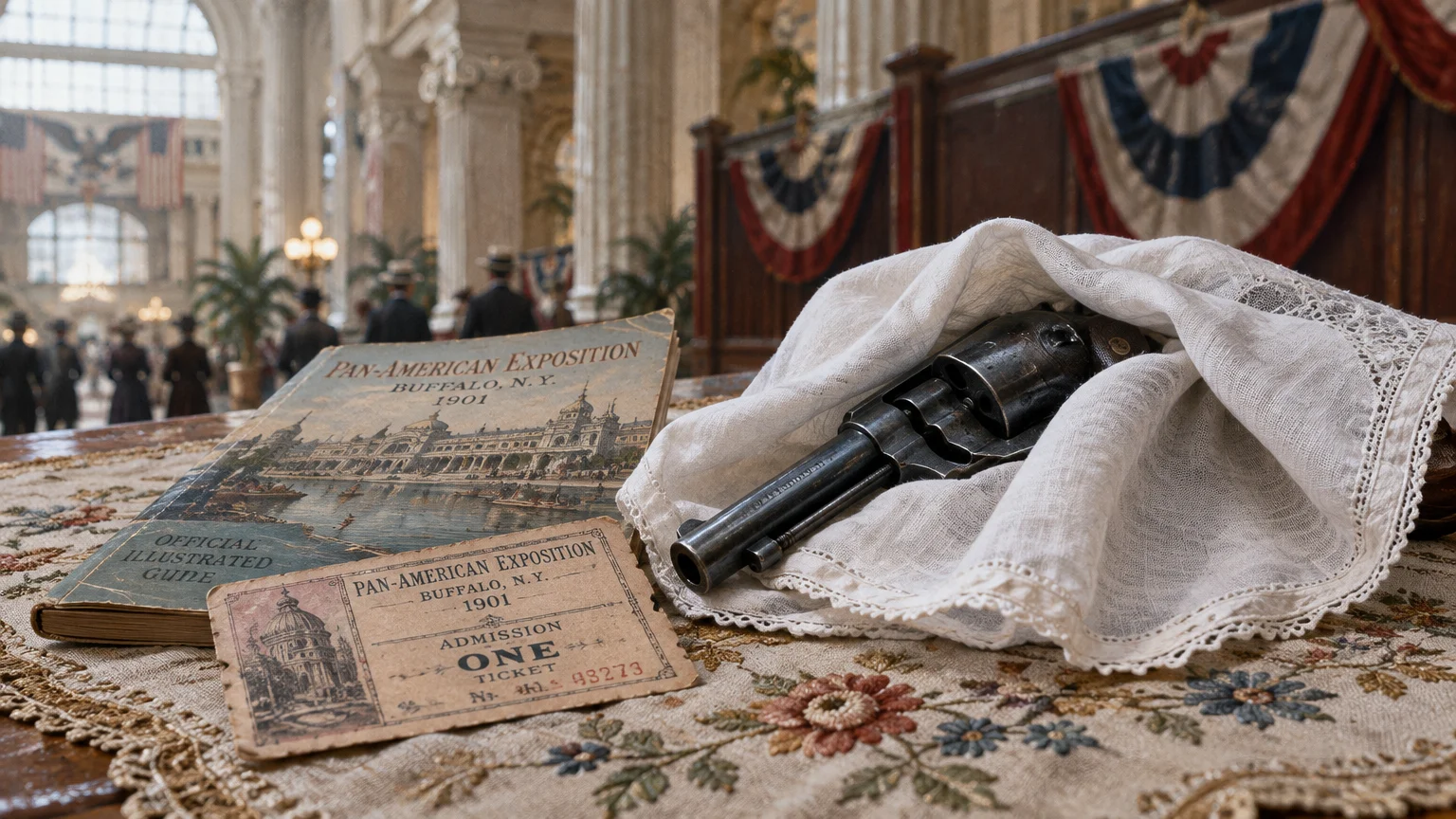
Viral Hit #3: William McKinley and the Dawn of the Secret Service
You enjoy modern presidential protection today because of an avoidable tragedy in Buffalo, New York. On September 6, 1901, President William McKinley greeted well-wishers inside the Pan-American Exposition’s crowded Temple of Music.
Anarchist Leon Czolgosz approached the receiving line with a .32-caliber revolver concealed beneath a white handkerchief. Czolgosz fired two shots into McKinley’s abdomen at point-blank range before guards tackled him.
McKinley initially appeared to recover from emergency surgery, reassuring citizens across the country with optimistic updates. However, undetected internal damage caused gangrene to spread rapidly around his digestive organs.
The president died eight days later on September 14, 1901, suddenly elevating Theodore Roosevelt to the presidency. New York State executed Czolgosz in the electric chair on October 29, 1901.
McKinley’s assassination shocked world leaders and convinced lawmakers that casual presidential greetings had become impossible. Following his sudden death, Congress formally tasked the U.S. Secret Service with round-the-clock presidential security.
- Date and Location: September 6, 1901, in Buffalo, New York.
- Perpetrator: Anarchist activist Leon Czolgosz.
- Concealment Method: A revolver wrapped inside a fake medical bandage.
- Security Milestone: The permanent assignment of the U.S. Secret Service to executive protective detail.
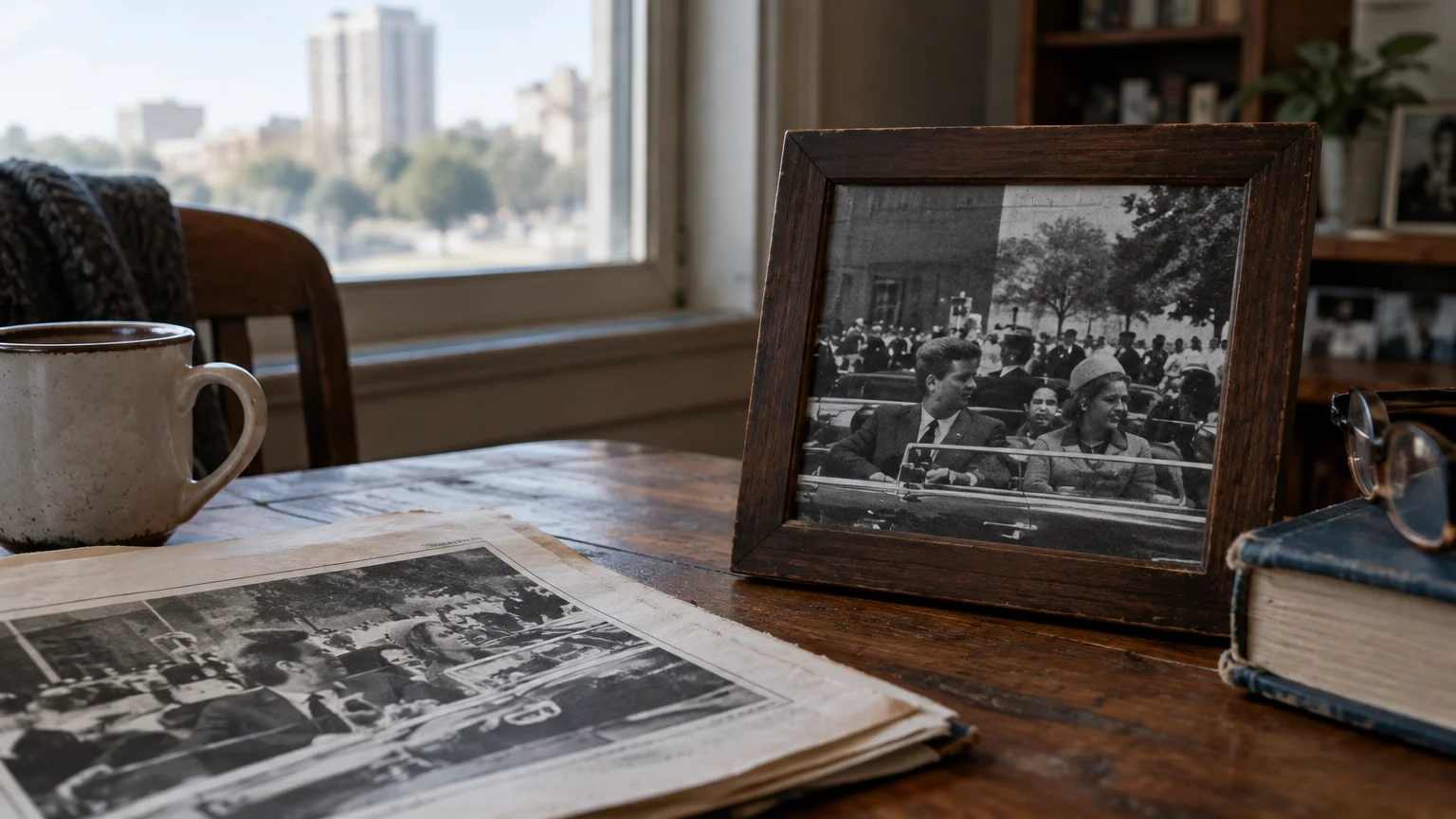
Viral Hit #4: John F. Kennedy and the Echoes of Dealey Plaza
No modern event transformed global political consciousness quite like the assassination of John F. Kennedy. On November 22, 1963, Kennedy rode through Dallas, Texas, in an open-top Lincoln Continental limousine beside his wife Jacqueline.
Sniper Lee Harvey Oswald fired three rifle rounds from the sixth floor of the Texas School Book Depository as the motorcade crossed Dealey Plaza. Kennedy sustained catastrophic head trauma and died minutes later at Parkland Memorial Hospital.
Just two days later on November 24, 1963, nightclub owner Jack Ruby shot Oswald dead on live national television inside Dallas Police headquarters. The stunning spectacle fueled decades of international fascination and endless conspiracy theories.
The tragedy immediately ended the romanticized era of open-air motorcades and leisurely presidential parades. Federal agencies overhauled crisis communication, trauma response, and perimeter surveillance across the globe.
You still see Kennedy’s visual imprint across European pop culture, from memorial postage stamps to Berlin street names. His sudden loss demonstrated how media technology could amplify collective grief in real time.
- Date and Location: November 22, 1963, at Dealey Plaza in Dallas, Texas.
- Assailant: Former U.S. Marine and defector Lee Harvey Oswald.
- Assassination Weapon: 6.5×52mm Carcano Model 38 infantry carbine.
- Cultural Aftermath: Total elimination of open-top presidential motorcades worldwide.
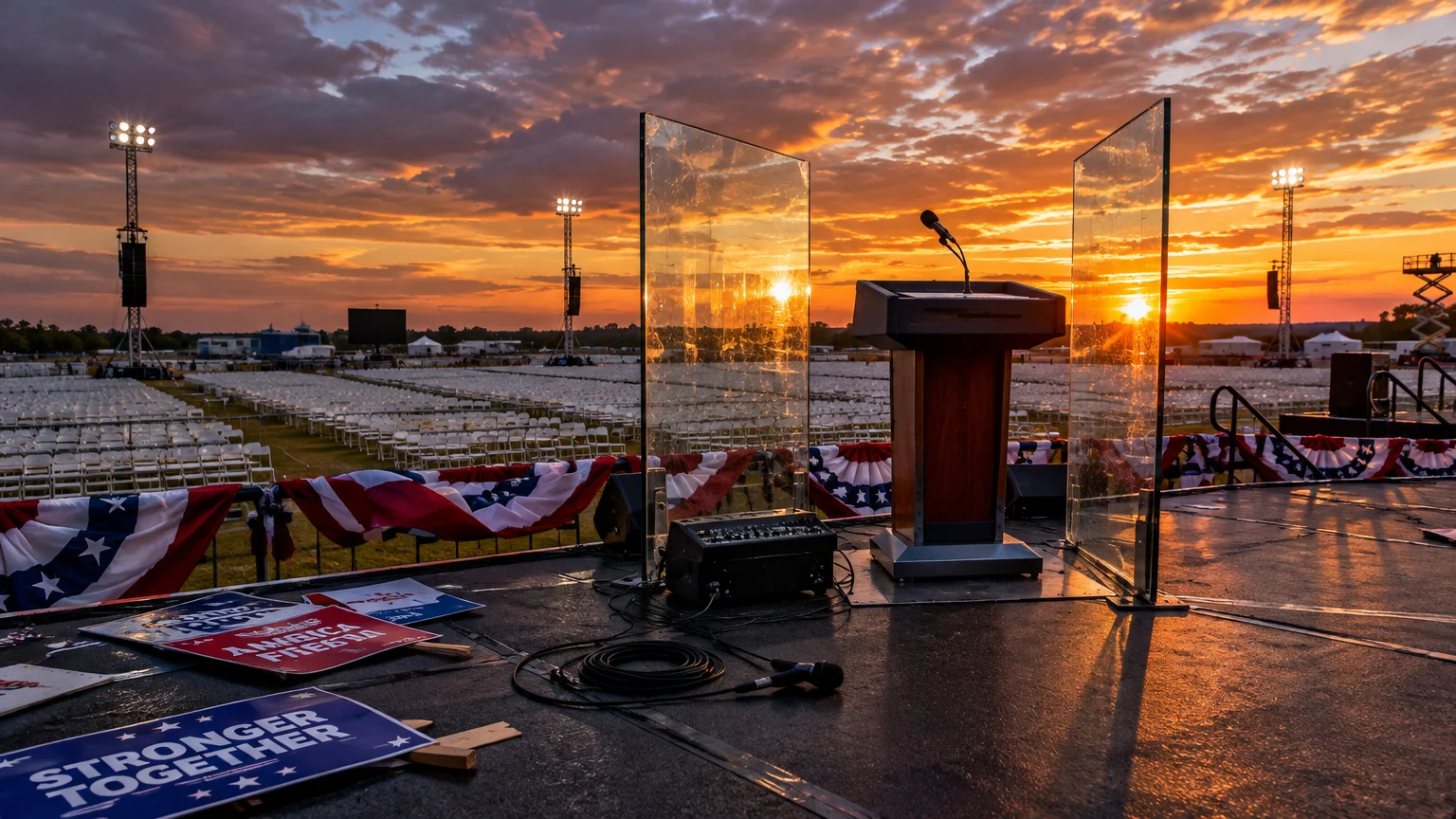
Viral Hit #5: Donald Trump and the High-Stakes Modern Threats
Modern executive security faced unprecedented public tests during Donald Trump’s political campaigns and presidency. On July 13, 2024, twenty-year-old Thomas Matthew Crooks opened fire during an open-air rally near Butler, Pennsylvania.
A bullet grazed Trump’s upper right ear, missing his skull by mere millimeters as he turned his head to read a chart. The Secret Service Counter Sniper Team immediately eliminated Crooks on the scene.
The attack took the life of attendee Corey Comperatore, while critically wounded spectator James Copenhaver suffered debilitating complications. Copenhaver died in Pittsburgh on September 23, 2026, bringing the incident’s total death toll to three.
Security forces thwarted another plot on September 15, 2024, at Trump International Golf Club in West Palm Beach, Florida. Agents spotted 58-year-old Ryan Wesley Routh lurking in the shrubbery with an SKS rifle before he could fire.
A federal jury convicted Routh on all counts on September 23, 2025. On February 4, 2026, U.S. District Judge Aileen Cannon sentenced Routh to life in prison without parole plus 84 months.
Violent threats persisted into 2026 when 31-year-old Cole Tomas Allen stormed the Washington Hilton screening checkpoint during the White House Correspondents’ Dinner on April 25, 2026. Armed with a shotgun, pistol, and knives, Allen fired and struck an agent’s vest.
Trump, Melania Trump, and Vice President JD Vance evacuated safely; Allen was indicted on May 5 and pleaded not guilty on May 11, 2026. Weeks later on May 23, 2026, agents fatally shot 21-year-old Nasire Best at a White House checkpoint.
- Butler Rally (2024): Trump survived an ear wound; total fatalities reached 3 following James Copenhaver’s 2026 death.
- West Palm Beach (2024): Ryan Wesley Routh received life without parole plus 7 years in February 2026.
- Washington Hilton (2026): Secret Service safely evacuated Trump, Melania, and JD Vance after an armed checkpoint breach.
- White House Checkpoint (2026): Agents neutralized gunman Nasire Best at 17th Street and Pennsylvania Avenue.
Viral Hit #6: Ronald Reagan and the Washington Hilton Ricochet
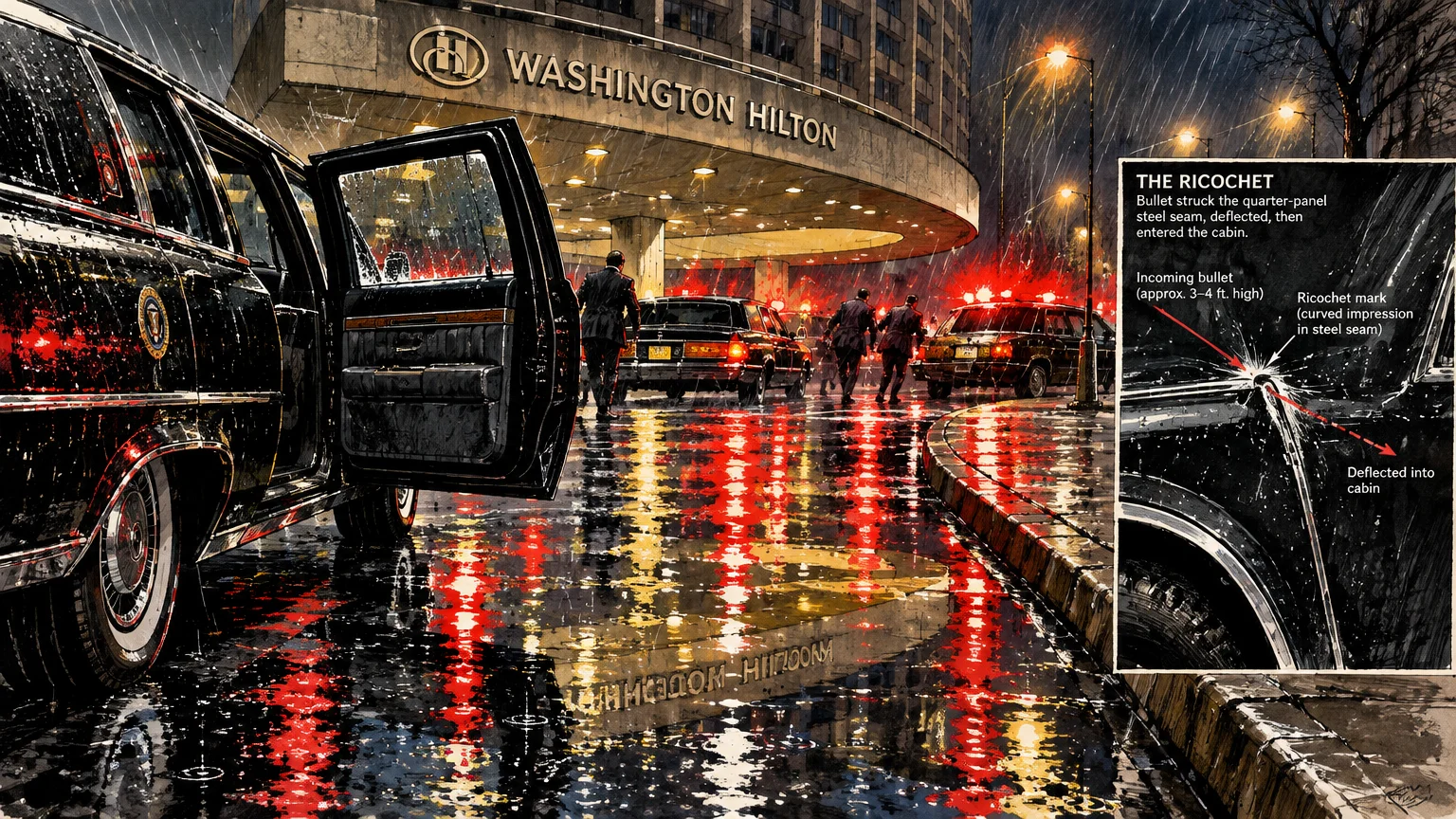
You can measure the fine line between tragedy and survival by less than one single inch. On March 30, 1981, Ronald Reagan stepped out of the Washington Hilton Hotel just 69 days into his presidency.
John Hinckley Jr. stepped forward from a press crowd and fired six explosive Devastator bullets from a .22-caliber revolver. Hinckley carried out the shooting in a delusional bid to impress Hollywood actress Jodie Foster.
A bullet ricocheted off the armored presidential limousine, entered Reagan’s left armpit, punctured his lung, and stopped mere millimeters from his heart. Secret Service agent Jerry Parr shoved Reagan into the car, racing directly to George Washington University Hospital.
The gunfire also critically injured Secret Service agent Tim McCarthy, police officer Thomas Delahanty, and Press Secretary James Brady. Brady suffered permanent brain damage, and his 2014 passing was formally ruled a homicide 33 years later.
A court found Hinckley not guilty by reason of insanity in 1982, leading to decades of institutional psychiatric confinement. A federal judge granted Hinckley full, unconditional release on June 15, 2022, after doctors certified his stability.
Reagan’s good humor during surgery—asking doctors if they were Republicans—boosted his popularity across Europe and North America. His survival fundamentally reshuffled Cold War diplomacy and accelerated global arms negotiations.
- Date and Location: March 30, 1981, outside the Washington Hilton Hotel.
- Motive: A stalker’s obsession with actress Jodie Foster.
- Critical Heroism: Agent Tim McCarthy threw his body in front of the gunfire to shield Reagan.
- Legal Outcome: Hinckley received an unconditional release from all supervision on June 15, 2022.
Viral Hit #7: Theodore Roosevelt and the 84-Minute Bull Moose Speech
Theodore Roosevelt personified the rugged “Bull Moose” moniker, but one legendary Wisconsin evening proved his astonishing physical resilience. On October 14, 1912, Roosevelt campaigned in Milwaukee as a third-party Progressive candidate.
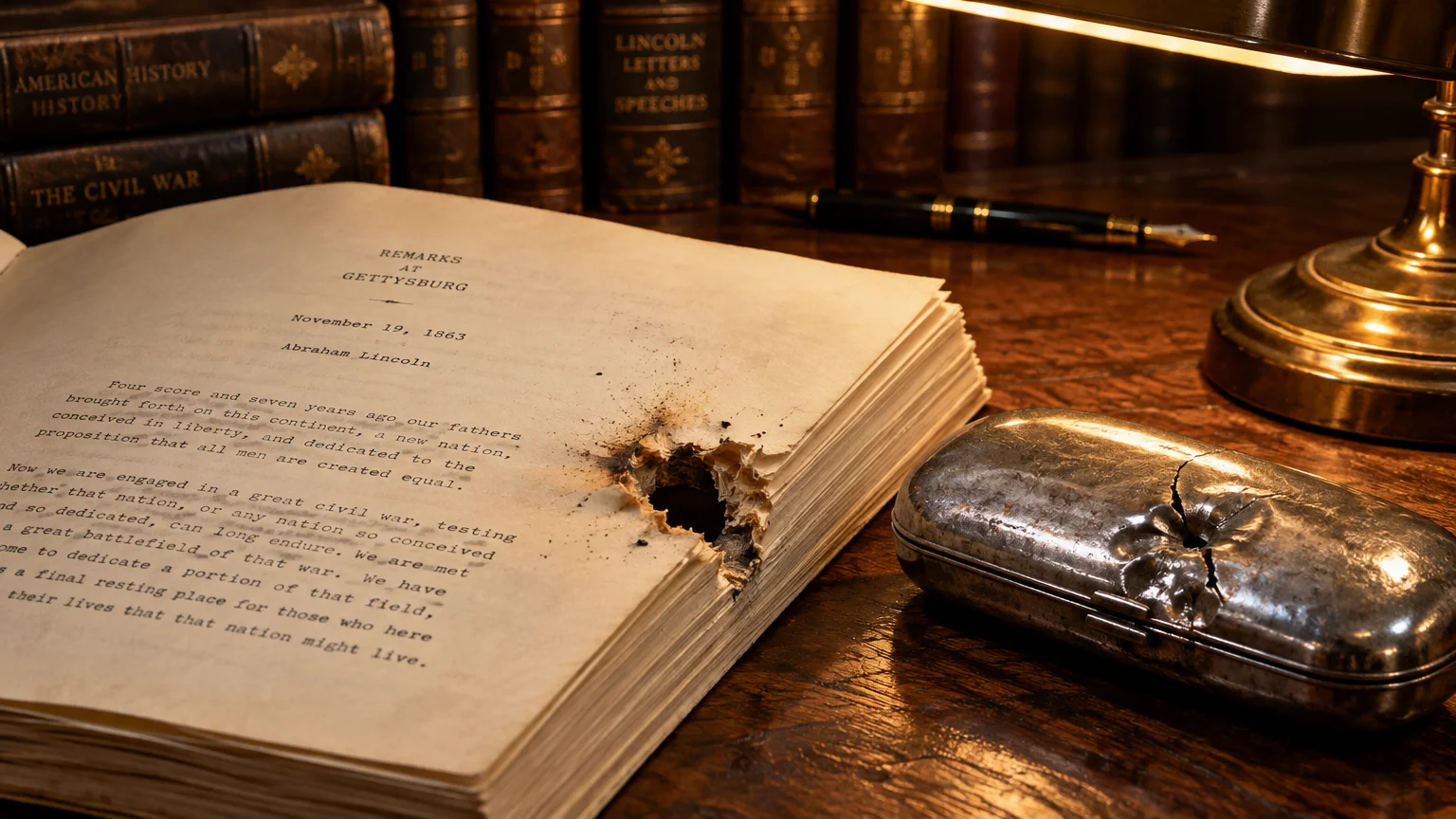
Saloonkeeper John Schrank drew a .38-caliber revolver and fired directly into Roosevelt’s chest at point-blank range. The bullet tore through his heavy coat, a steel eyeglasses case, and a dense 50-page folded speech manuscript.
Those pocket items absorbed enough kinetic energy to prevent the bullet from penetrating Roosevelt’s lung tissue. Noticing that he was not coughing blood, Roosevelt boldly concluded his lungs remained intact.
Roosevelt refused hospital transport and walked straight onto the auditorium stage to deliver an electrifying 84-minute speech. He opened his coat, showed the bloody shirt to the gasping crowd, and declared that it takes more than that to kill a bull moose.
Doctors later determined that attempting to extract the slug carried more risk than leaving it untouched. Roosevelt carried Schrank’s bullet lodged inside his rib wall for the rest of his natural life.
- Date and Location: October 14, 1912, in Milwaukee, Wisconsin.
- Armor of Choice: A steel spectacles case and a 50-page folded speech manuscript.
- Key Moment: Roosevelt delivered an 84-minute address before agreeing to visit a physician.
- Medical Decision: Surgeons permanently left the bullet inside his chest wall.
Viral Hit #8: Gerald Ford and the Two California Close Calls
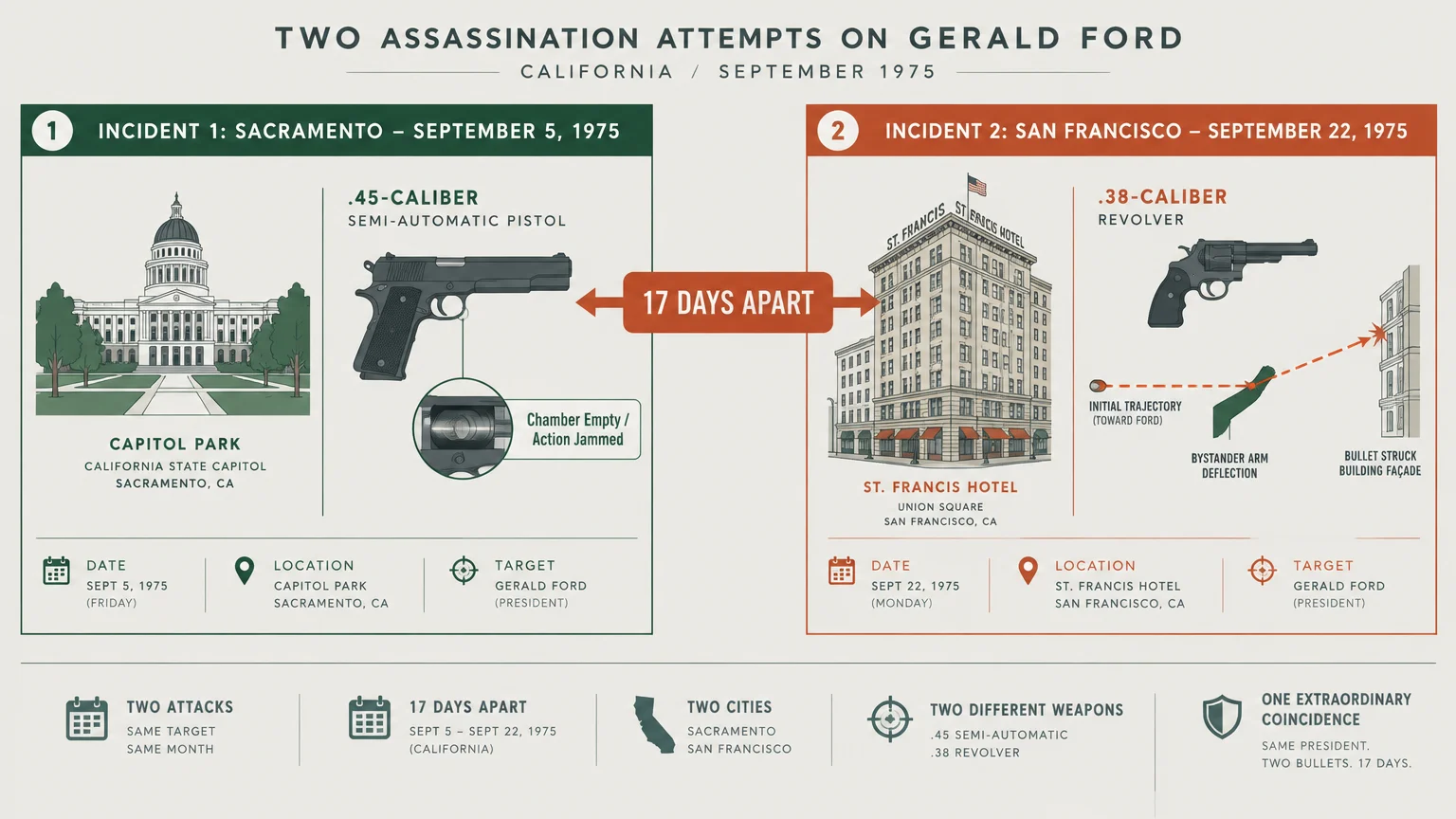
You will not find another American leader who survived two assassination attempts in the same state within seventeen days. In September 1975, Gerald Ford faced separate assassination plots during public appearances across California.
On September 5, 1975, Manson Family follower Lynette “Squeaky” Fromme confronted Ford in a Sacramento park. Fromme pointed a semi-automatic Colt .45 pistol at point-blank range, but she had failed to rack the slide to chamber a cartridge.
Secret Service agents tackled Fromme before she could correct the mechanical mistake, and she eventually gained parole in August 2009. Just seventeen days later on September 22, 1975, Ford visited the St. Francis Hotel in San Francisco.
Radical activist Sara Jane Moore stood in the crowd 40 feet away and fired two shots with a .38-caliber revolver. Bystander and disabled Marine veteran Oliver Sipple grabbed Moore’s arm as she pulled the trigger, deflecting the second shot.
Authorities granted Moore parole in December 2007, and she passed away on September 24, 2025, at the age of 95. The double escape spurred the Secret Service to keep presidents far away from uncontrolled sidewalk crowds.
- Sacramento Attempt: Lynette Fromme pulled an unchambered .45 pistol on September 5, 1975.
- San Francisco Attempt: Sara Jane Moore fired two rounds outside a hotel on September 22, 1975.
- Civilian Hero: Oliver Sipple tackled Moore, redirecting her aim and saving Ford’s life.
- Historical Update: Moore was paroled in 2007 and died on September 24, 2025.
Viral Hit #9: Andrew Jackson and the Miraculous Capitol Misfires
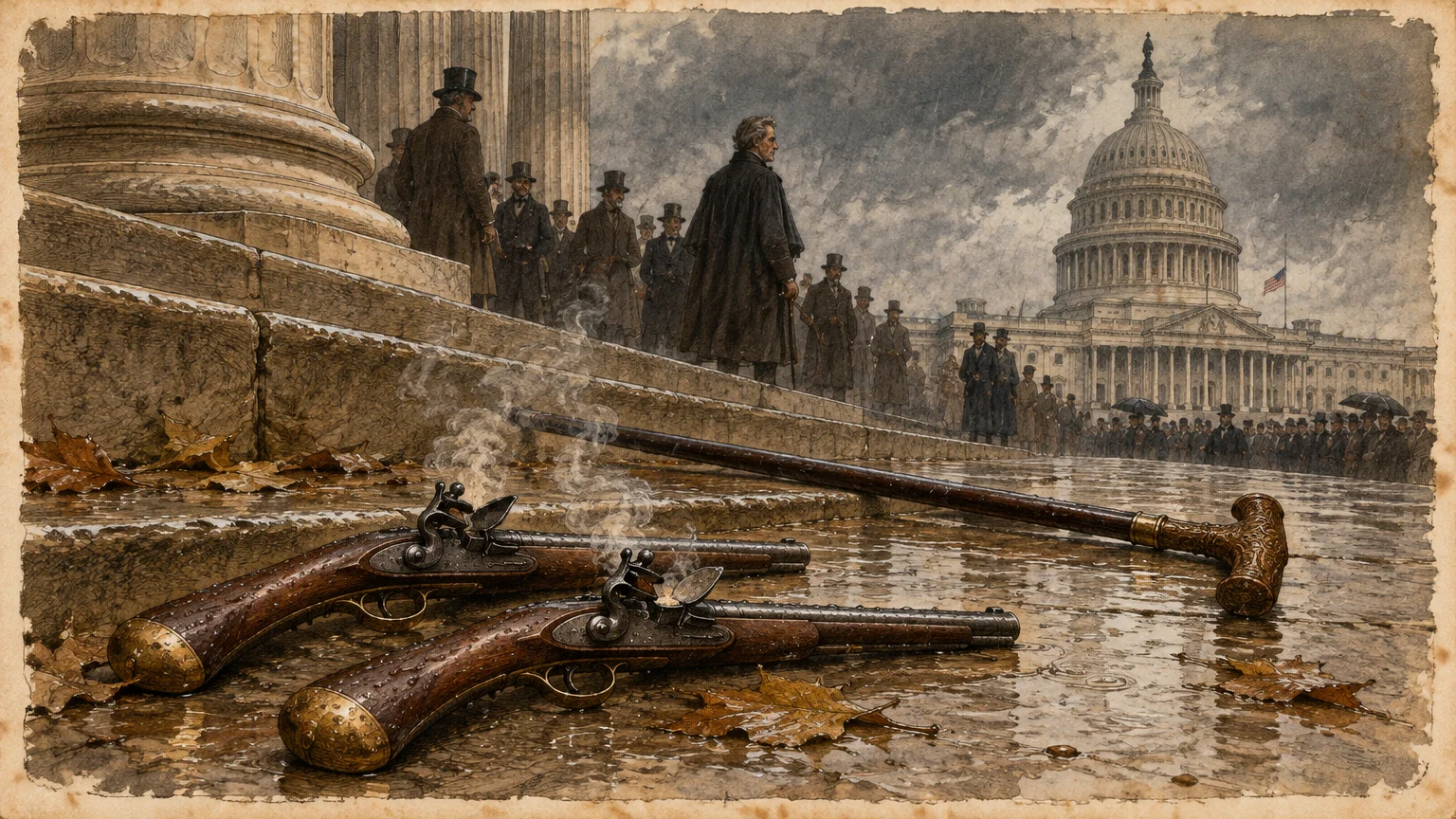
You have to travel back to 1835 to witness the first recorded assassination attempt on a sitting American president. On January 30, 1835, Andrew Jackson attended a congressional funeral inside the U.S. Capitol rotunda.
Unemployed house painter Richard Lawrence stepped from behind a column and leveled a flintlock pistol at Jackson’s chest from point-blank range. The weapon’s percussion cap exploded with a loud pop, but the gunpowder charge failed to ignite.
Lawrence instantly drew a second primed pistol and pulled the trigger, but that firearm inexplicably misfired as well. Historical firearms specialists later determined that humid Capitol weather likely dampened both powder charges simultaneously.
Instead of ducking for cover, the fiery 67-year-old president charged forward and beat Lawrence relentlessly with his hickory walking cane. Davy Crockett and nearby congressmen had to restrain Jackson to keep Lawrence alive for trial.
Judges found Lawrence not guilty by reason of insanity after he claimed to be King Richard III of England. The shocking incident proved that even early commanders-in-chief needed organized defensive barriers.
- Date and Location: January 30, 1835, at the U.S. Capitol in Washington, D.C.
- Assailant: Delusional English house painter Richard Lawrence.
- Scientific Miracle: Two working flintlock pistols misfired back-to-back due to damp atmospheric conditions.
- Presidential Response: Jackson counter-attacked the shooter with his walking stick.
Viral Hit #10: George W. Bush and the Tartan Handkerchief Grenade
You might think high-tech body armor saves modern leaders, but a simple fabric handkerchief once prevented an international catastrophe. On May 10, 2005, George W. Bush addressed tens of thousands of citizens in Tbilisi, Georgia.
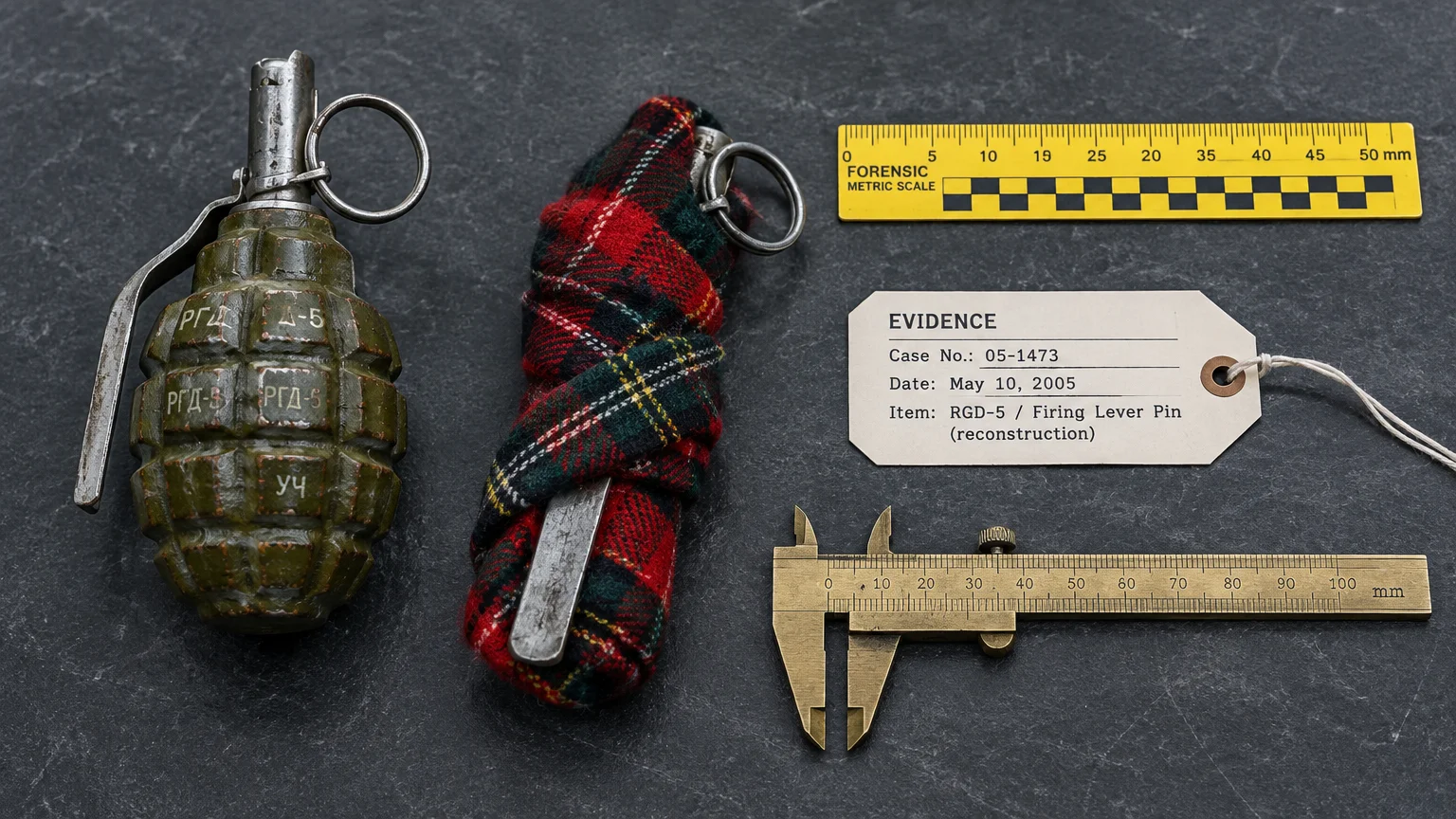
Attacker Vladimir Arutyunian threw a live Soviet-made RGD-5 fragmentation grenade toward the speaker’s podium from 60 feet away. The deadly explosive struck an audience member and tumbled harmlessly to the ground without detonating.
Investigators discovered that Arutyunian had wrapped the grenade tightly inside a red tartan plaid handkerchief. The thick cloth pinned the safety lever against the grenade body, preventing the striker pin from striking the primer.
This close call echoes several other breathtaking modern escapes that altered geopolitical stability. In 1933, Giuseppe Zangara fired five rounds at Franklin D. Roosevelt in Miami, missing FDR but fatally wounding Chicago Mayor Anton Cermak.
Similarly, Puerto Rican nationalists stormed Harry Truman’s Blair House residence in 1950, killing White House police officer Leslie Coffelt. Later, intruders fired rifles at the executive mansion during Bill Clinton’s and Barack Obama’s presidencies.
- Tbilisi Incident (2005): A tartan handkerchief prevented a live RGD-5 grenade from detonating near George W. Bush.
- Miami Ambush (1933): Giuseppe Zangara narrowly missed FDR; Chicago Mayor Anton Cermak was mortally wounded.
- Blair House Attack (1950): Gunmen attempted to assassinate Harry S. Truman, resulting in officer Leslie Coffelt’s heroic sacrifice.
- Mansion Shootings (1994, 2011): Gunfire targeted the White House complex under both Bill Clinton and Barack Obama.
Keep the Buzz Going: How to Share Responsibly
You hold immense publishing power whenever you repost breaking political history and security updates on your social feeds. Sensational clips and dramatic headlines spread rapidly, but inaccurate claims can distort public understanding within minutes.
Always verify breaking footage before hitting share, especially when algorithmic feeds push emotionally charged speculation. Look for multiple primary sources and authenticated agency statements before assuming viral rumors are accurate.
You should also respect eyewitnesses and victims caught in violent public events. Focus your online commentary on verified historical analysis and systemic security improvements rather than amplifying graphic imagery.
Responsible sharing preserves creator credibility and helps your community stay grounded during breaking news cycles. By curating clean, verified facts, you elevate the quality of online historical discourse.
For verified reporting and fact-checking, rely on outlets like Reuters and rumor-busting sites such as Snopes. For platform policy updates, follow official resources like the Google Transparency Report.
Disclaimer: Viral stories evolve quickly. Always verify details with primary sources before sharing or acting on this content.
Frequently Asked Questions
How often do assassination attempts occur in American presidential history?
Historical records show that approximately one-third of all American presidents have faced direct assassination plots, armed attacks, or serious near-miss encounters. Four presidents were killed in office, making presidential protection one of the world’s most demanding security operations.
Advancements in ballistic shielding, intelligence surveillance, and perimeter control have drastically reduced successful breaches over the past century. However, modern political polarization continues to generate complex public threats.
Why do American presidential security threats matter to European readers?
The American presidency directly anchors North Atlantic defense partnerships, international trade agreements, and global market stability. A sudden disruption in White House executive leadership instantly impacts European stock exchanges, currency valuations, and diplomatic security pacts.
Understanding these historical close calls gives you deep insight into how allied nations coordinate cross-border counter-terrorism intelligence today.
How can digital creators cover sensitive assassination history without demonetization?
Content creators must focus on objective educational framing, verified historical facts, and primary source documentation. Avoid sensationalizing violence or using graphic thumbnail imagery that violates community guidelines on digital video and social platforms.
Adhering to strict content policies ensures your analysis remains monetizable while building authentic long-term trust with your audience.
What specific safety reforms emerged directly from past presidential attacks?
Every major attack triggered immediate systemic overhauls in security protocol across the United States. William McKinley’s death established permanent Secret Service protection, while John F. Kennedy’s assassination permanently eliminated open-top convertibles from executive transport.
Following recent incidents, authorities implemented pressurized ballistic glass enclosures, expanded perimeter drone surveillance, and reinforced venue checkpoints nationwide.





Leave a Reply