Every election cycle delivers bold political promises, but history shows that campaign rhetoric often crashes into reality. You can evaluate today’s wild headlines much better when you examine past political spectacles.
Politicians routinely promise the moon, guaranteed prosperity, or instant fixes to secure your vote. When the dust settles, however, governance forces tough compromises, dramatic U-turns, or awkward apologies.
Explore these ten unforgettable presidential campaign pledges to see how wild campaign promises history truly gets. You will uncover what happened when ambition collided with executive power.
Viral Hit #1: Newt Gingrich’s American Moon Colony
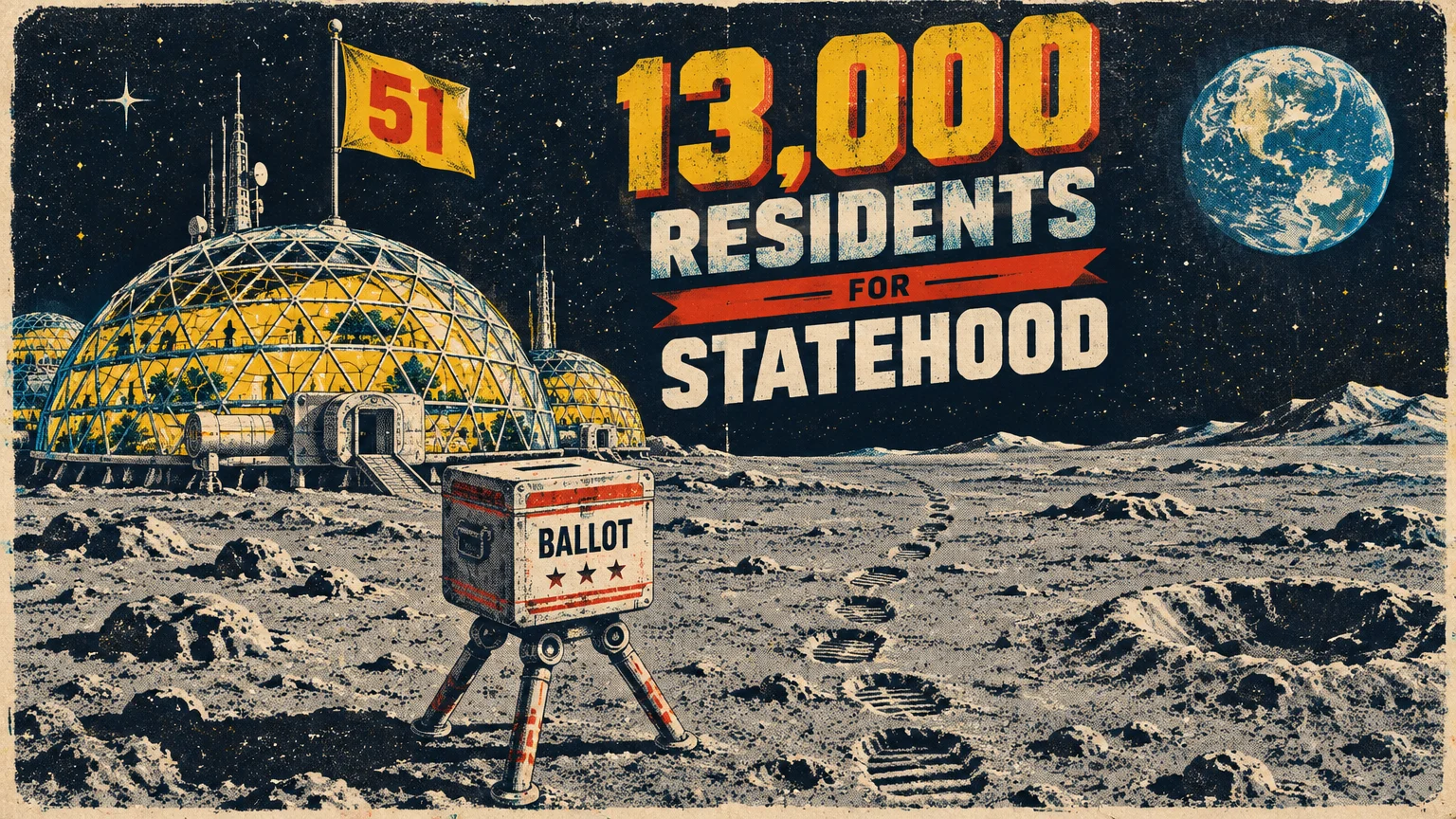
Imagine packing your bags for a brand new life on the dusty lunar surface. During the 2012 Republican primary, former House Speaker Newt Gingrich promised to establish a permanent American lunar base by 2020.
Speaking in Cocoa, Florida, on January 25, 2012, Gingrich aimed his bold speech directly at local space-coast workers. He assured the crowd that an ambitious commercial space program would revitalize the regional economy.
His wildest detail emerged when he outlined lunar governance. Gingrich declared that once 13,000 Americans lived on the moon, they could petition to become the 51st U.S. state.
The announcement immediately exploded across cable news and early social media memes. However, rival candidates ridiculed the plan as an expensive fantasy that ignored pressing earthly deficits.
Gingrich won only two primary states before suspending his campaign. Today, international space accords govern lunar exploration, and no permanent lunar base exists.
You can use this pledge to spot geographic campaign pandering. When candidates visit specialized economic hubs, they often pitch wild projects tailored specifically to excite local industries.
- Campaign Stop: January 25, 2012, in Cocoa, Florida.
- Core Target: Construct a permanent manned lunar base by 2020.
- The Wild Detail: Colonists could seek U.S. statehood after reaching 13,000 residents.
- Final Outcome: The campaign folded after winning only two states, leaving the moon empty.
Viral Hit #2: Vermin Supreme’s Free Ponies and Zombie Turbines
Few political spectacles match the sheer audacity of perennial candidate Vermin Supreme. Wearing a Wellington boot on his head, the performance artist has entered presidential races since 1987 to mock modern elections.
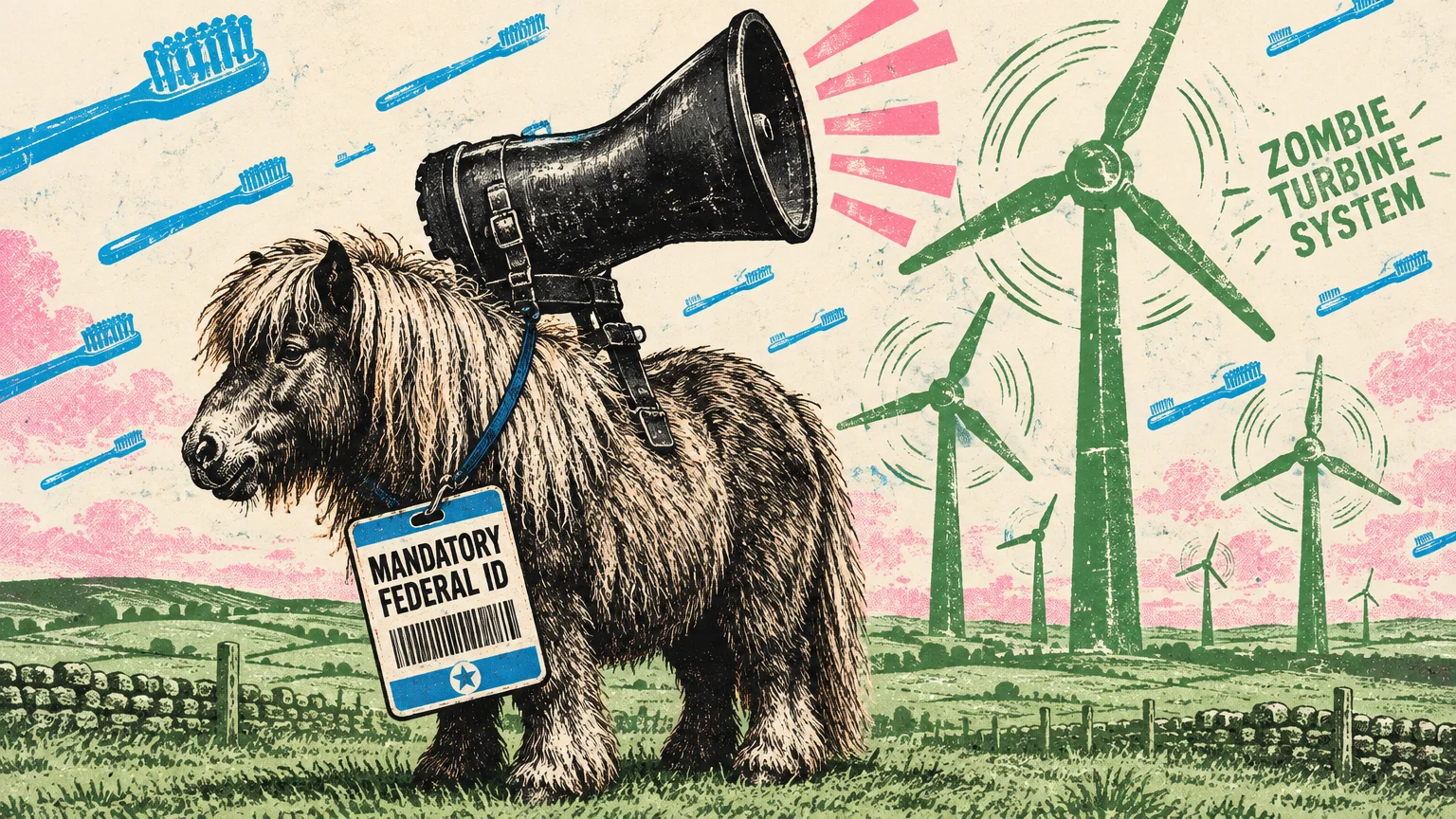
His signature campaign pledge guarantees a free pony for every American citizen. Supreme argues that free ponies would anchor a new pony-based economy while serving as a mandatory federal identification system.
His eccentric platform also mandates strict dental hygiene laws. Supreme promises to deploy federal agents to enforce daily toothbrushing, claiming bad breath ruins national morale.
He even pledges government funding for time-travel research and zombie apocalypse preparation. Supreme proposes building giant turbines powered by zombies to provide clean, renewable energy for future generations.
Audiences adore his viral theatrics during presidential primaries. In 2020, Supreme surprised political pundits by finishing in third place for the Libertarian Party presidential nomination.
His satirical run offers you a sharp analytical lens. Supreme exposes how easily voters embrace lavish giveaway promises without asking who will fund or manage the logistical overhead.
- Candidate Trademark: Wears a Wellington boot on his head and carries an oversized toothbrush.
- Flagship Promise: Provide a free pony for every American citizen as a federal ID.
- Energy Strategy: Harness renewable power by driving giant turbines with zombies.
- Primary Milestone: Finished in third place for the 2020 Libertarian Party presidential nomination.
Viral Hit #3: Barack Obama’s Pledge to Close Guantanamo Bay
During his historic 2008 campaign, Barack Obama promised to shutter the Guantanamo Bay military detention camp. He framed the closure as a vital moral imperative to restore America’s international standing.
Obama moved swiftly after taking office to fulfill his pledge. On January 22, 2009, he signed Executive Order 13492, ordering the facility closed within 12 months.
His executive order quickly hit an immovable wall in Congress. Lawmakers from both parties barred the transfer of detainees to federal prisons on American soil, blocking trial plans entirely.
Obama adapted by transferring dozens of low-risk detainees to partner nations. He successfully slashed the camp’s population from 242 down to 41 prisoners before leaving the White House.
The detention camp remains open in 2026, holding 15 military detainees alongside newer migrant processing operations. Bipartisan congressional funding prohibitions continue to prevent full administrative closure.
Fact-checking trackers documented this complex reality. Across Obama’s two terms, PolitiFact tracked 533 promises, determining that 48% were political promises kept, 28% compromised, and 24% broken.
You must recognize that executive orders cannot override statutory appropriations. When a president promises sweeping institutional reforms, always examine whether Congress controls the purse strings.
- Executive Action: Signed Executive Order 13492 on January 22, 2009.
- Targeted Timeline: Complete closure of the detention facility within one year.
- Population Reduction: Detainee count dropped from 242 down to 41 under Obama.
- Current Status: The facility holds 15 military detainees in 2026 due to statutory transfer bans.
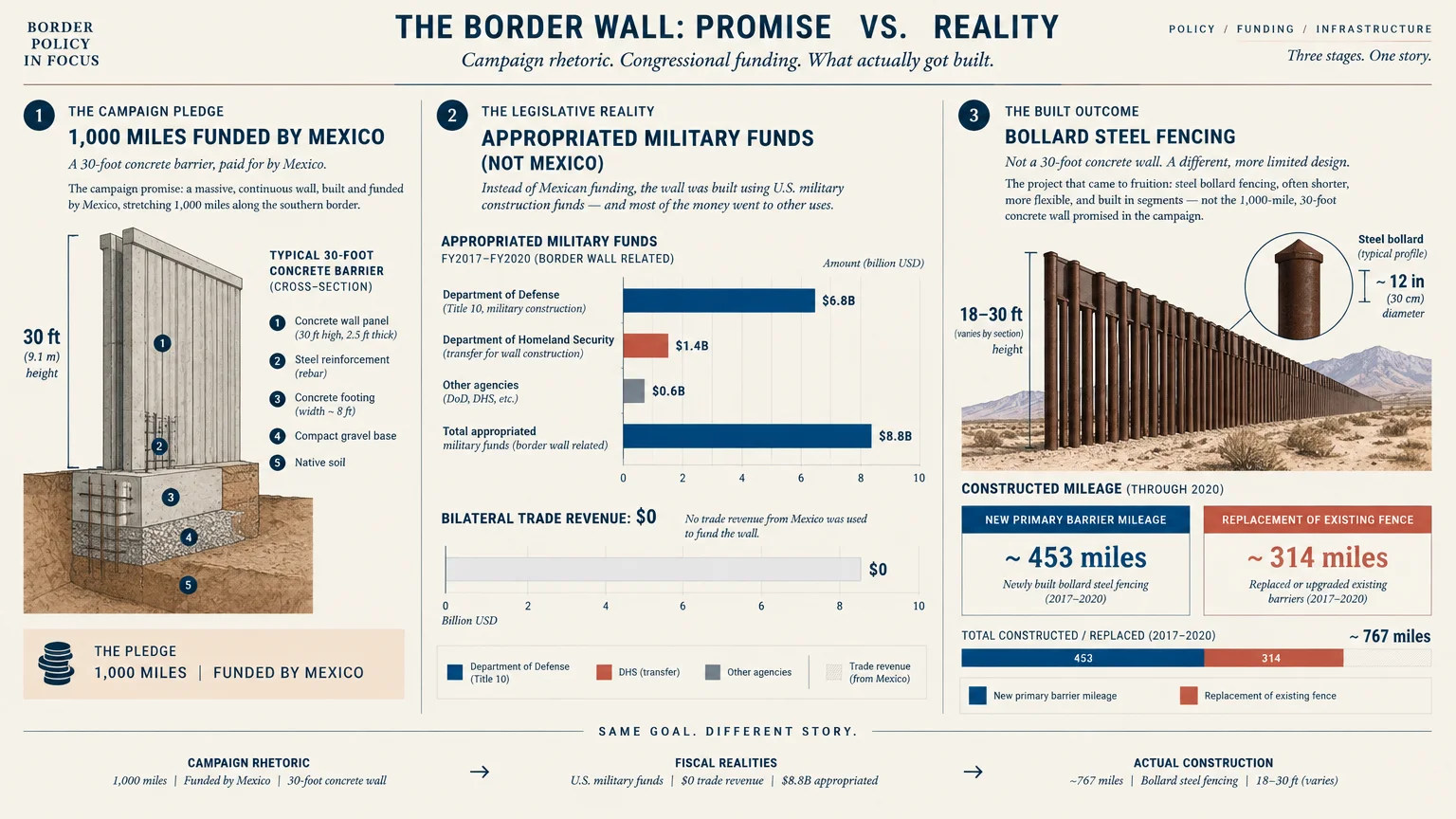
Viral Hit #4: Donald Trump’s Border Wall Paid for by Mexico
In 2015 and 2016, Donald Trump captivated his base with an audacious infrastructure promise. He pledged to construct a towering wall across the entire 1,954-mile southern border to halt unauthorized migration.
Trump repeatedly assured roaring crowds that Mexico would pay for the barrier in full. The confident declaration became his signature chant at dozens of high-energy arena rallies.
Mexican officials immediately rejected the proposal, refusing to spend a single peso on the border barrier. Mexico paid exactly $0 toward the construction costs throughout his entire term.
Trump instead secured funding by diverting billions of dollars from military construction budgets and securing congressional allocations. During his first term, U.S. Customs and Border Protection built 458 total miles of barriers.
Most of that construction replaced older, dilapidated fencing. Only roughly 47 to 80 miles covered terrain where no barrier existed previously.
PolitiFact tracked 102 first-term Trump promises, recording 23% kept, 22% compromised, and 53% broken. His wall funding pledge stands among the most famous broken campaign promises in modern history.
During Trump’s second term in 2025 and 2026, Congress allocated $46.5 billion in federal funds for new barrier construction. By early 2026, the MAGA-Meter showed 19% of his new pledges kept and 45% in progress.
You should view this pledge as a warning against assuming sovereign compliance. A political candidate cannot dictate foreign fiscal policy simply by repeating promises on the campaign trail.
- Original Promise: Build a 1,954-mile wall financed completely by Mexico.
- Foreign Contribution: Mexico paid exactly $0 toward border barrier construction.
- First-Term Output: Built 458 miles, with 47 to 80 miles in previously open areas.
- Second-Term Funding: Congress appropriated $46.5 billion in U.S. taxpayer funds for border construction.
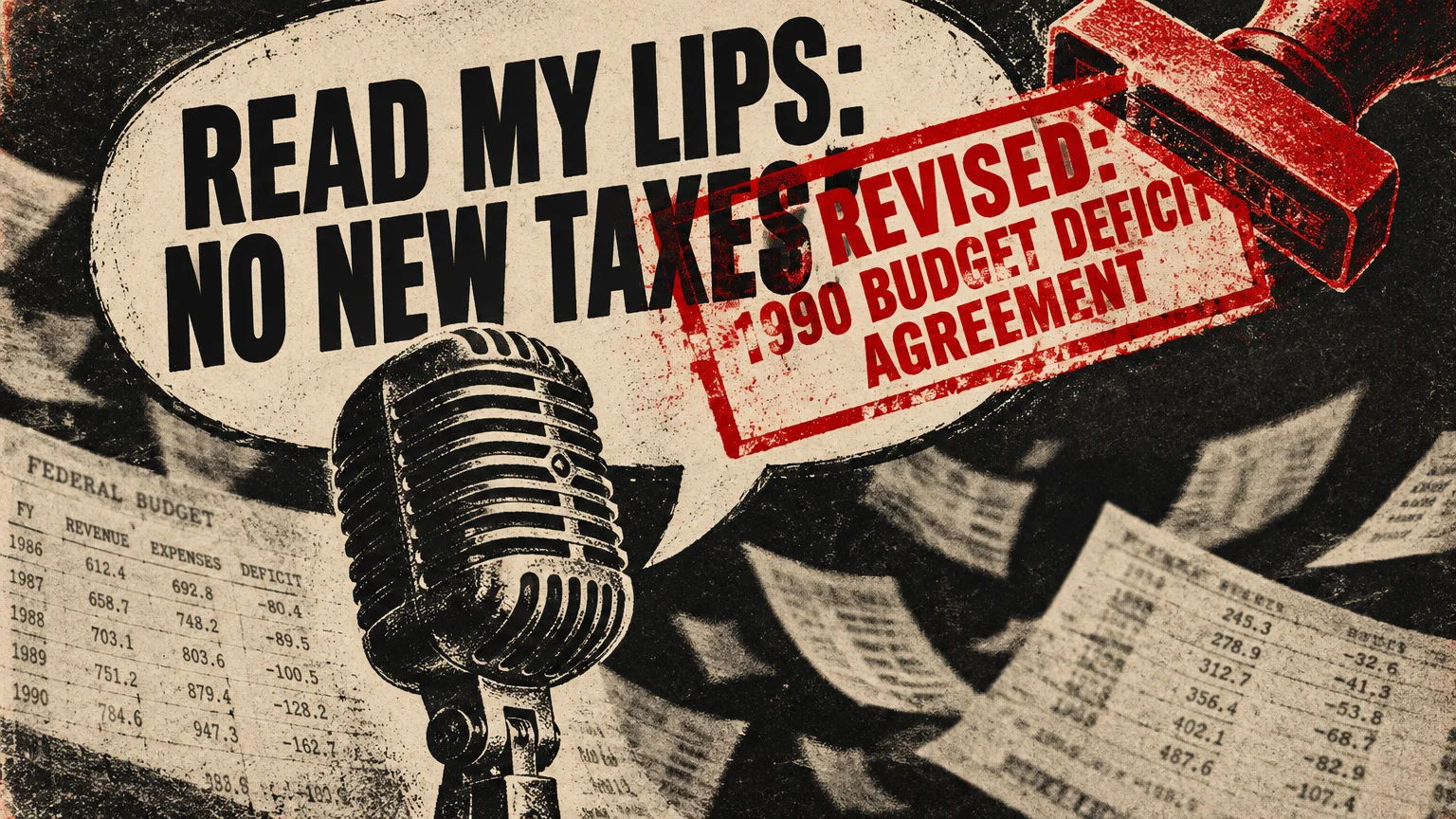
Viral Hit #5: George H.W. Bush’s “Read My Lips: No New Taxes”
George H.W. Bush delivered one of the most unforgettable pledges in American political history on August 18, 1988. Speaking at the Republican National Convention, he drew a firm line on fiscal policy.
Bush challenged critics to read his lips as he promised never to raise taxes under any circumstances. The bold slogan energized the party faithful and secured him a decisive victory that November.
Governing proved far messier once Bush entered the Oval Office. Mounting federal deficits and a stubborn Democratic congressional majority created an urgent budget crisis that threatened government operations.
To stabilize the national economy, Bush agreed to a major bipartisan compromise. On November 5, 1990, he signed the Omnibus Budget Reconciliation Act of 1990 into federal law.
The legislation increased payroll and excise taxes while raising the top marginal income tax rate from 28% to 31%. Conservative voters felt deeply betrayed by the dramatic fiscal reversal.
The broken vow severely damaged Bush’s political credibility heading into the 1992 election. Rival candidates relentlessly weaponized the broken pledge, helping Bill Clinton defeat the incumbent president.
This historic blunder reminds you that rigid economic pledges crumble against structural fiscal deficits. When evaluating tax pledges, check whether projected revenues match future federal spending requirements.
- Speech Date: August 18, 1988, at the Republican National Convention.
- The Guarantee: “Read my lips: no new taxes.”
- The Compromise: Signed the Omnibus Budget Reconciliation Act of 1990 on November 5, 1990.
- Tax Changes: Increased the top personal income tax rate from 28% to 31%.

Viral Hit #6: Herbert Hoover’s Chicken in Every Pot
During the exuberant economic boom of the late 1920s, Republicans championed boundless consumer prosperity. A widely circulated 1928 Republican Party newspaper advertisement declared that Herbert Hoover would eliminate American poverty.
The advertisement promised a chicken in every pot and a car in every backyard garage. The evocative image convinced millions of voters that industrial growth would guarantee permanent household wealth.
Hoover swept into office in March 1929 riding high expectations. However, his optimistic economic vision collided with disaster only eight months later.
The stock market crashed violently in October 1929, triggering the Great Depression. By 1933, nationwide unemployment soared to nearly 25%, shattering the financial stability of millions of American families.
Desperate citizens gathered in squalid shantytowns that critics cynically dubbed Hoovervilles. The famous slogan of guaranteed chickens and cars transformed into a bitter symbol of political overconfidence.
Hoover suffered a landslide defeat to Franklin D. Roosevelt in the 1932 election. His shattered pledge permanently altered how historians and economists analyze executive economic promises.
Always treat market guarantees with extreme skepticism during macroeconomic peaks. Presidents do not control business cycles, and broad market euphoria often conceals dangerous structural vulnerabilities.
- Campaign Slogan: A chicken in every pot and a car in every garage.
- Source Material: 1928 Republican Party newspaper advertisements.
- Market Collapse: Wall Street crashed in October 1929, eight months into Hoover’s presidency.
- Depression Impact: National unemployment reached nearly 25% by 1933.
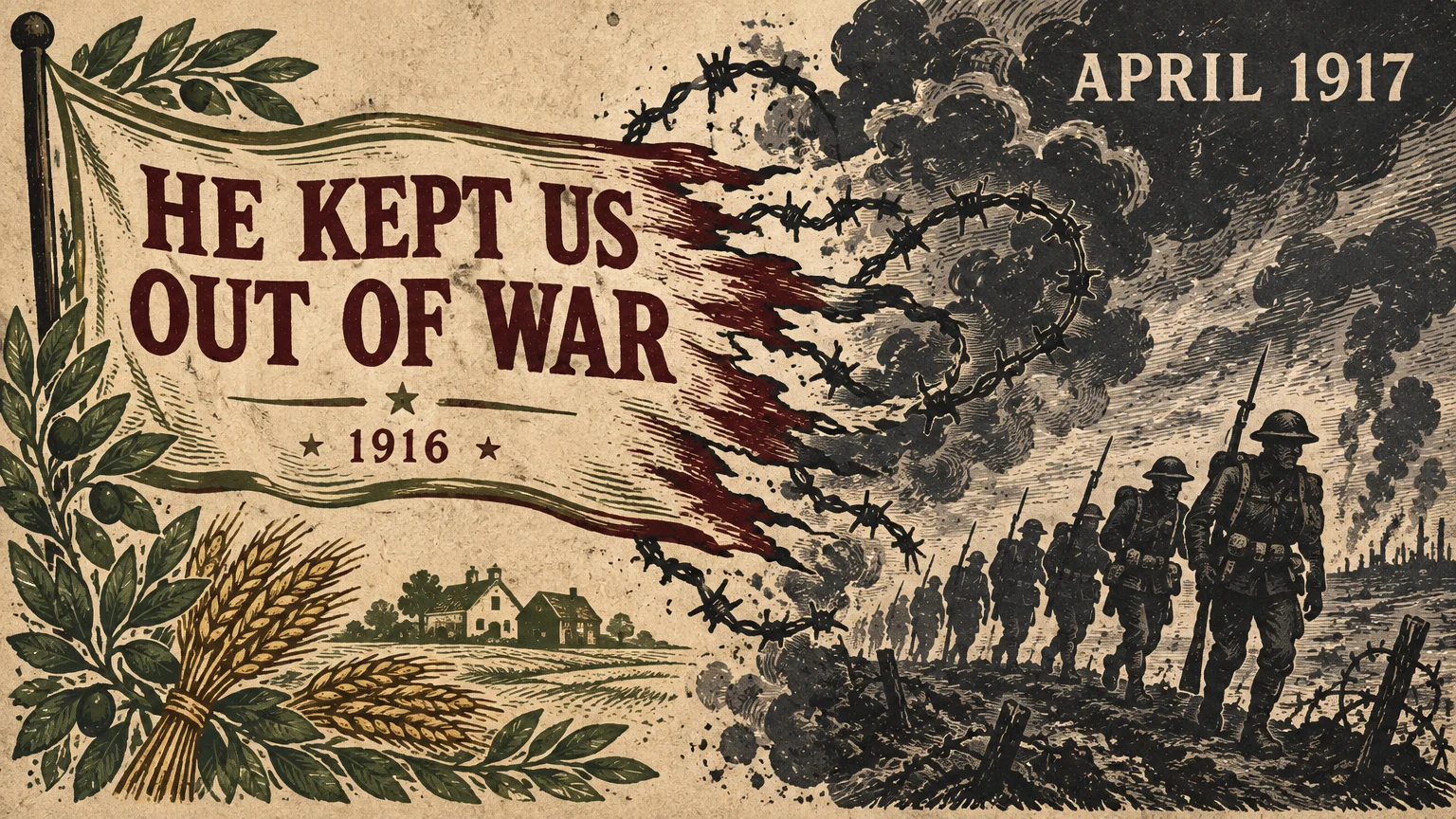
Viral Hit #7: Woodrow Wilson’s “He Kept Us Out of War”
As World War I consumed Europe with devastating bloodshed, Woodrow Wilson ran for re-election in 1916. He positioned himself as the pragmatic peacemaker who protected American citizens from foreign imperial conflicts.
Democratic organizers rallied voters around the powerful slogan, “He Kept Us Out of War.” The promise resonated deeply with isolationist communities, earning Wilson a narrow victory at the ballot box.
The peaceful pledge dissolved almost immediately after his second term began. German submarine warfare resumed aggressive attacks on merchant shipping, while the intercepted Zimmermann Telegram exposed hostile alliances.
Wilson took his oath of office on March 5, 1917. Less than one month later, on April 2, 1917, he asked Congress to declare war against Germany.
Congress formally approved the declaration on April 6, 1917, thrusting America into global conflict. Wilson insisted the nation had to fight to make the world safe for democracy.
The sudden reversal stunned voters who had cast ballots for peace just months earlier. It remains one of the fastest policy pivots in presidential campaign pledges.
This historic shift highlights the fragile nature of foreign policy commitments. International crises rarely respect campaign slogans, forcing commanders-in-chief to reverse peace promises under shifting strategic pressures.
- Campaign Pitch: “He Kept Us Out of War” during the 1916 election.
- Inauguration Milestone: Wilson began his second term on March 5, 1917.
- War Speech: Addressed Congress to request a declaration of war on April 2, 1917.
- Official Entry: The United States formally entered World War I on April 6, 1917.
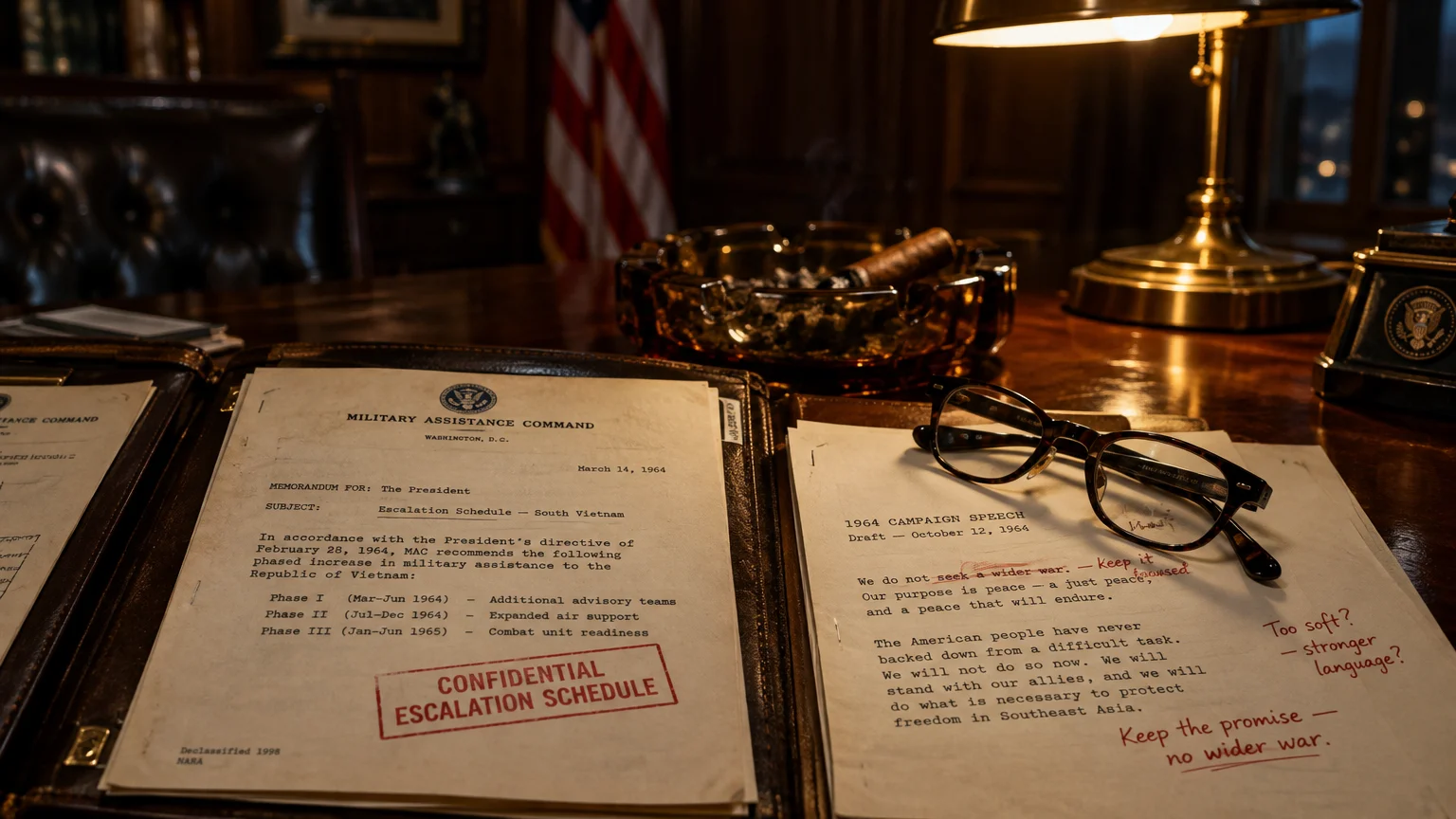
Viral Hit #8: Lyndon B. Johnson’s Anti-Escalation Vow
During the intense 1964 election, Lyndon B. Johnson drew a sharp contrast with his hawkish opponent, Barry Goldwater. Johnson portrayed himself as the prudent leader who would prevent a dangerous land war in Asia.
Speaking in Akron, Ohio, on October 21, 1964, Johnson made an explicit commitment to the American public. He insisted that American boys should not fight nine thousand miles away for Asian soldiers.
The anti-war stance resonated across the nation, propelling Johnson to a historic landslide victory. Voters trusted his word that he would keep ground forces out of Southeast Asia.
Internal White House planning told a completely different story. Shortly after his inauguration, Johnson initiated Operation Rolling Thunder and dispatched regular combat troops into South Vietnam.
By 1968, American military deployments in Vietnam climbed to a staggering peak of 536,100 personnel. The dramatic escalation shattered Johnson’s credibility and triggered massive anti-war protests across the United States.
Facing immense political backlash and mounting casualties, Johnson shocked the nation in 1968 by declining to seek re-election. His broken promise cemented a deep public distrust in presidential war powers.
You must evaluate wartime rhetoric by investigating military contingency planning. Candidates often broadcast peaceful intentions publicly while their national security staff draft aggressive deployment orders behind closed doors.
- Speech Location: Akron, Ohio, on October 21, 1964.
- Public Vow: Promised not to send American boys to fight an Asian ground war.
- Peak Deployment: Stationed 536,100 U.S. military personnel in Vietnam by 1968.
- Political Consequence: Massive anti-war protests forced Johnson to abandon his 1968 re-election campaign.
Viral Hit #9: Joe Biden’s Blanket Student Debt Cancellation
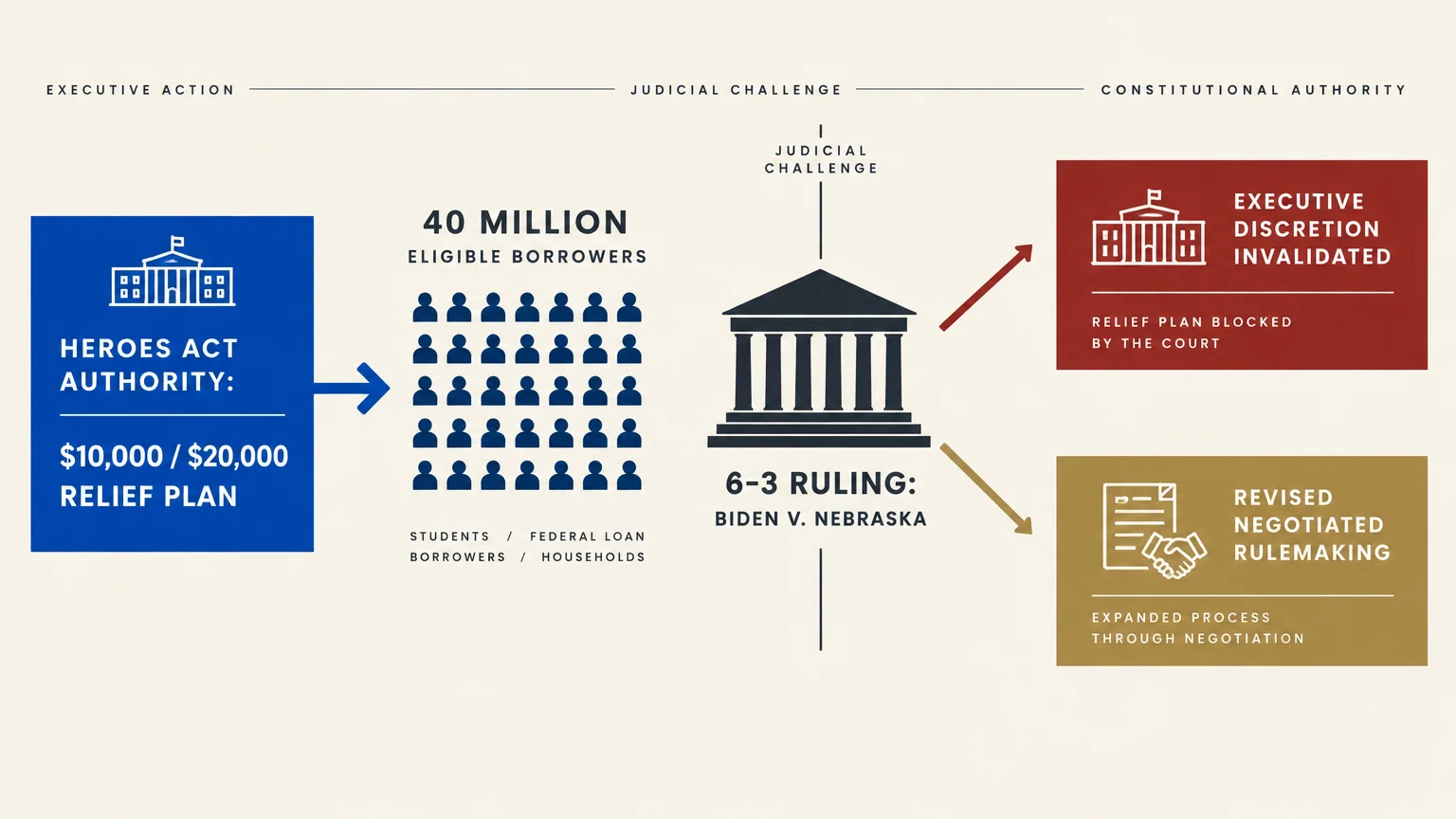
During his 2020 presidential run, Joe Biden courted young voters burdened by mounting higher education costs. He promised to cancel all undergraduate tuition debt from public colleges for borrowers earning under $125,000.
The ambitious proposal energized progressive organizers and drove heavy youth turnout at polling precincts. After taking office, Biden unveiled an administrative plan to cancel over $400 billion in federal student debt.
Opponents challenged the executive action in federal court, arguing that only Congress possessed the power to cancel federal debts. The legal battle culminated before the U.S. Supreme Court in June 2023.
In the landmark ruling Biden v. Nebraska, the Supreme Court struck down the broad forgiveness program. The court determined that the executive branch had exceeded its statutory authority under the HEROES Act.
Biden adjusted his strategy by utilizing existing federal programs, including Public Service Loan Forgiveness and income-driven repayment adjustments. Before leaving office in January 2025, his administration forgave $183.6 billion for 5 million borrowers.
PolitiFact’s Biden tracker evaluated 99 pledges at the end of his term, recording 33% kept, 32% compromised, and 34% broken. The student loan fight illustrates how judicial review shapes administrative pledges.
When a candidate promises broad financial relief via executive signature, examine the statutory authorization closely. Bold administrative actions often crumble under judicial scrutiny without direct congressional legislation.
- 2020 Pledge: Cancel all undergraduate tuition debt from public colleges for eligible earners.
- Court Ruling: The Supreme Court invalidated the $400+ billion program in June 2023.
- Alternative Result: Forgave $183.6 billion for over 5 million borrowers using targeted statutory programs.
- Biden Tracker Scorecard: PolitiFact logged 33% kept, 32% compromised, and 34% broken pledges.
Viral Hit #10: Barack Obama’s Healthcare Plan Guarantee
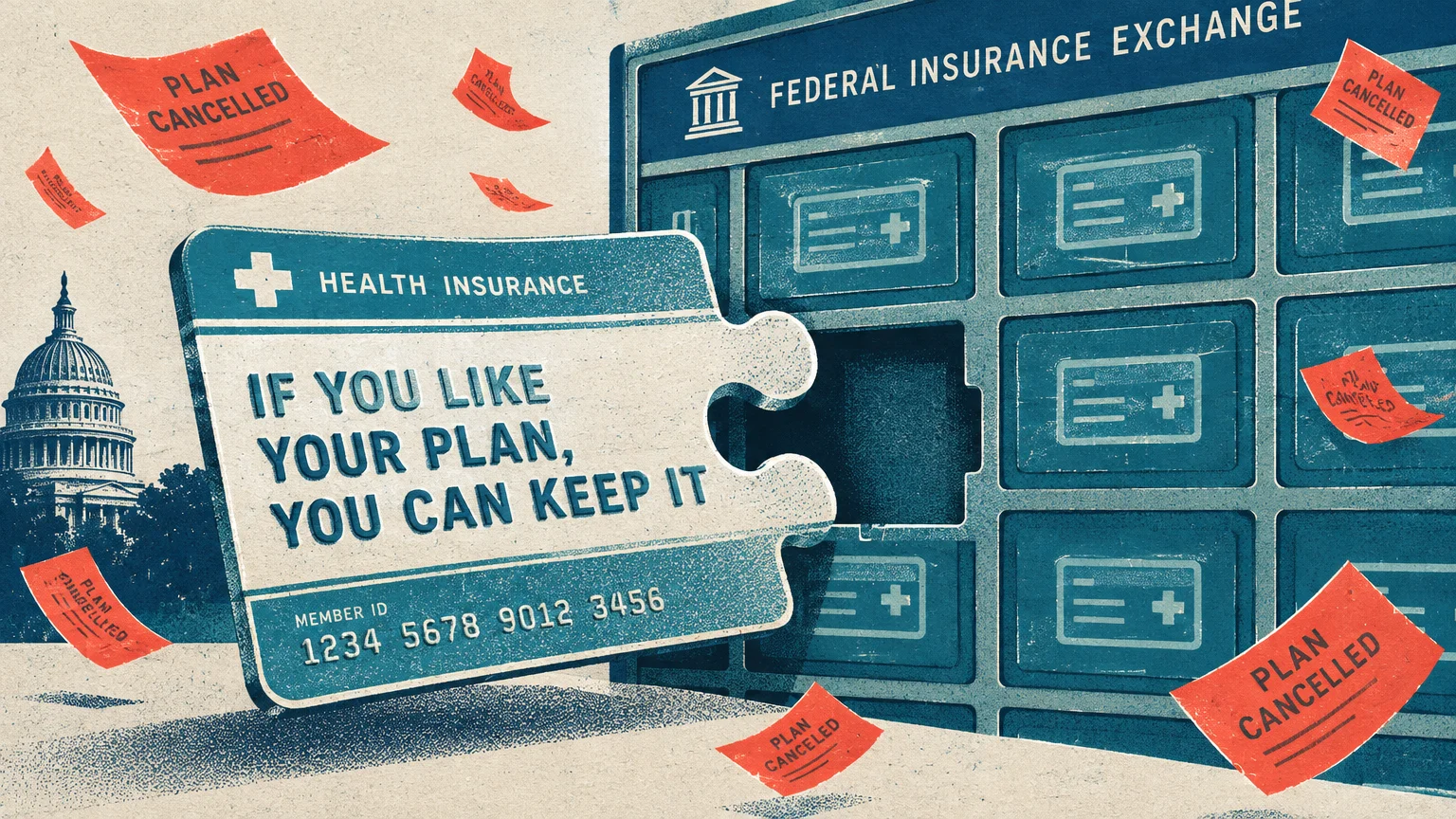
Barack Obama campaigned aggressively on comprehensive healthcare reform throughout his 2008 and 2012 presidential bids. To reassure anxious voters, he repeatedly promised that anyone satisfied with their existing medical plan could keep it.
The soothing slogan helped neutralize conservative arguments that healthcare reform would disrupt private employer coverage. Administration officials repeated the talking point across hundreds of interviews and campaign appearances.
The reality proved far more complicated once the Affordable Care Act’s regulatory standards took effect in late 2013. The law required insurance plans to include essential benefits, such as maternity and mental healthcare.
Because millions of individual insurance policies lacked those mandated coverages, insurers canceled them outright. At least 4.7 million Americans received termination notices in late 2013, losing the policies they preferred.
The public outcry was swift and intense across the political spectrum. Independent fact-checker PolitiFact officially designated Obama’s repeated healthcare pledge as their Lie of the Year for 2013.
Obama publicly apologized and introduced transitional rules, but the political fallout dragged down his approval numbers. The episode remains a striking case study in regulatory disruption.
Systemic policy reforms inevitably disrupt individual market choices. When politicians promise that massive industry transformations will leave your current arrangements untouched, treat those guarantees with healthy skepticism.
- The Pledge: “If you like your health care plan, you can keep it.”
- Regulatory Impact: ACA mandates forced insurers to discontinue non-compliant individual policies.
- Consumer Disruption: At least 4.7 million Americans received policy cancellation notices in late 2013.
- Fact-Check Penalty: PolitiFact named the slogan their Lie of the Year in 2013.

Keep the Buzz Going: How to Share Responsibly
Political storytelling spreads like wildfire across social feeds, but viral momentum requires editorial responsibility. When you come across sensational claims about presidential campaign pledges, verify the source before hitting share.
Look beyond short video clips and partisan memes to review complete speech transcripts. Context often reveals whether a candidate proposed a genuine legislative priority or an aspirational soundbite.
Credit original creators, journalists, and data researchers whenever you share insightful political analysis. Proper attribution honors quality reporting and allows your community to trace claims back to their origin.
Foster constructive dialogue by keeping online discussions respectful and fact-based. Modeling digital kindness encourages open-minded exploration rather than polarized arguments.
For verified reporting and fact-checking, rely on outlets like Reuters and rumor-busting sites such as Snopes. For platform policy updates, follow official resources like the Google Transparency Report.
Frequently Asked Questions
How long do broken campaign promises stay relevant in political culture?
Unfulfilled promises retain cultural and political traction for decades. Opponents frequently revive historic failures during subsequent debates to undermine a political party’s credibility and discipline.
Famous lines like Bush’s tax pledge still serve as cautionary tales in contemporary policy discussions. Major political reversals endure as defining symbols of executive overreach or vulnerability.
Why do American presidential promises matter to European citizens?
White House policies directly shape transatlantic security alliances, European trade balances, and international diplomacy. Pledges concerning foreign aid, energy tariffs, or military deployments trigger immediate consequences across European capitals.
Studying American campaign promises history also helps European voters decode populist messaging in domestic politics. The rhetorical strategies that win elections often cross borders effortlessly.
How can digital creators use political promises data without legal risk?
Digital creators can analyze political records safely by relying on publicly accessible government archives and nonpartisan fact-checkers. Fair use protections generally cover analytical commentary, parody, and educational reporting.
Always license archival media properly and credit reporting institutions when displaying primary footage. Rigorous sourcing protects your digital channels against copyright strikes and platform demonetization.
What safety steps protect you from political misinformation on social media?
Diversify your news intake by tracking multiple independent newsrooms rather than relying on a single platform algorithm. Algorithmic feeds frequently amplify extreme rhetoric to drive user engagement.
Conduct a quick election promises fact check using dedicated nonpartisan repositories before reacting to viral claims. Developing disciplined verification habits prevents deceptive narratives from misleading your network.
Disclaimer: Viral stories evolve quickly. Always verify details with primary sources before sharing or acting on this content.







Leave a Reply