For most Americans, the Fourth of July is going to look a lot different this year. Due to the coronavirus(COVID-19) outbreak, several cities and states have agreed to suspend their annual parades, festivals, and firework shows, as well as closing picnic areas and park pavilions to prevent crowds from gathering.
It’s a long-awaited 4th July weekend— a holiday usually celebrated with big backyard barbecues, massive firework displays, and family and friends gatherings. But with many regions of the country having to deal with dramatic spikes in coronavirus cases and the concern that the country’s last holiday weekend, Memorial Day, has triggered this troubling trajectory, the fourth of July is likely to look a bit unusual from what we’re used to.
While some states and cities are actively trying to minimize the potential for further spread by closing (or closing) businesses, people in other areas are left to navigate this summer holiday weekend themselves. So, what’s the worst place to go this July 4th?
The Centers for Disease Control and Prevention (CDC) is also urging people to take necessary safety precautions this Independence Day. Addressing the recent spike in coronavirus cases, Robert Redfield, director of the CDC, said, “For the Fourth of July, which is a family event, we want to emphasize that it’s really important that we get back to being vigilant as our collective commitment … to protect vulnerable friends, family, community.”
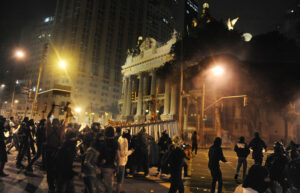
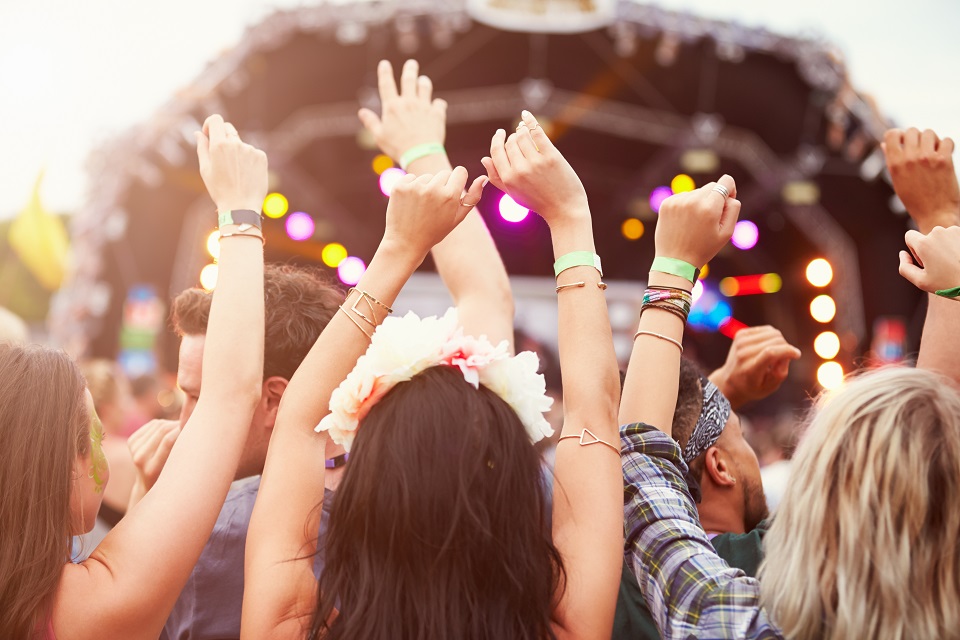
According to Thomas Russo, MD, Chief of the Division of Infectious Disease at the University of Buffalo, it’s any indoor environment where people gather without masks, such as bars and restaurants. Russo agrees that gathering like this is the “worst-case scenario,” particularly if alcohol is involved, as it decreases people’s willingness to keep distance and to follow other protective behaviors.
“If you’re going to have a party and some of the guests that you invite are going to be anti-maskers, that presents a problem,” he says of indoor gatherings. “Willingness to wear masks is quite variable. There’s a better mask culture that’s ongoing in [certain] parts of the world.”
The truth is, there’s definitely a certain amount of inherent risk involved if you’re going to leave your house on a holiday weekend or invite guests over. But certain options come with risks that are much greater than others. Hosting or attending outdoor activities is desirable, but you should not be under the impression of complete protection from coronavirus in these scenarios.
“Outdoors is safer, but you’re not going to be bulletproof if you’re not following the rules,” Russo says, especially “if you’re in close quarters without distancing and masks for a prolonged period of time.”
According to Russo, yes, “bad behavior outdoors is safer than bad behavior indoors, but you can still get easily infected outdoors.”
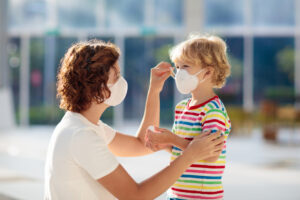
Many fireworks displays across the country have been canceled in an effort to prevent crowds. However, some cities are still planning fireworks, although a bit different this year because of the virus. Some are providing “drive-in” displays— where people are told to park and stay in their cars for the show — while others are urging people to watch fireworks from less crowded, socially isolated places rather than gathering in one location. If you’re in an area with others, stay at a safe distance of six feet, and always wear a cloth face cover as recommended by the CDC.
The CDC recommends staying outside if possible (and, if not, using a well-ventilated indoor space) and reducing the number of people you invited. Ask your guests to wear a cloth face mask and promote social distancing by separating tables and chairs at six feet apart. In addition, the CDC suggests you and your guests to wash or sanitize your hands before and after eating, and to disinfect any frequently touched surfaces— such as tables, counters, seat covers, etc.—regularly.
As far as food goes, the CDC suggests that guests bring their own dining ware (plates, cups, napkins, utensils) to prevent potential spreading the virus. You can also ask your guests to bring their own food and drink or, if you want to, avoid the buffet and instead choose single-serve portions (such as individual snack bags and bottles).
According to the CDC, you should also have one person cooking or serving food to prevent numerous people from handling food or shared utensils. Once the celebration comes to an end, the CDC also suggests that you write down all of the guests in attendance in case you need it for potential contract tracing. And, of course, fully clean and disinfect everything that was used during the party.
So, to summarize, here’s where you want to be this holiday weekend: outdoors, drinking in moderation, with enough distance from other people, and with everyone wearing masks. If your July 4th plans do not follow these requirements, you should make alternative arrangements in order to stay safe.