
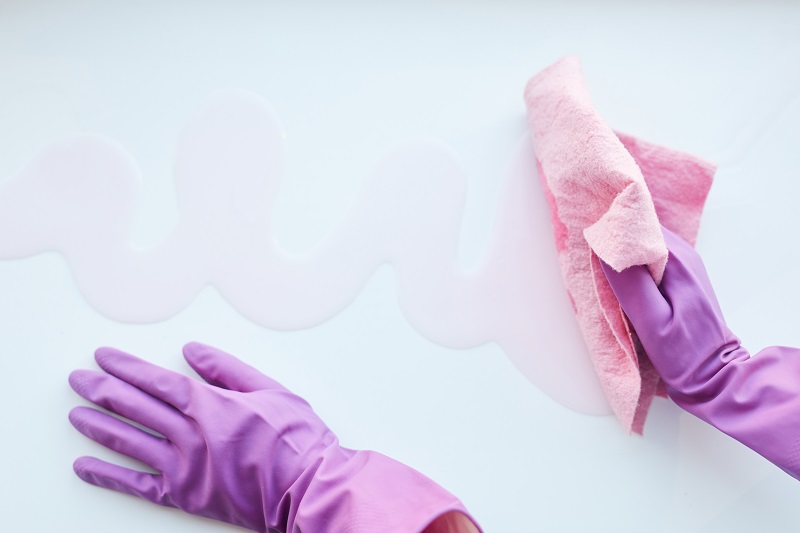
You’ve left your seemingly safe house and went out into the world to get groceries or other essential products, now is the time to learn how to disinfect everything in order to reduce the risk of spreading COVID-19 throughout your household.
Disinfecting vs. cleaning
Firstly, it is very important to understand the difference between disinfecting and cleaning.
Social distancing and self-quarantining in your home are two very important tools in helping flatten the curve and reduce the spread of COVID-19. However, disinfecting and cleaning anything that enters your home from the outside world, including your hands, is also crucial.
Scientists and the medical community are still working and discovering the multiple ways in which COVID-19 can be transmitted from one person to another, one thing is for sure though, proper hygiene is an important step in the fight. What does that mean when it comes to cleaning and disinfecting the items you bring into your home?
“One of the challenges we have is that there is a lot of baseline information about the particular virus that causes COVID-19, SARS CoV-2, but very little basic research has been performed to determine how long it can survive on surfaces,” says Meghan A. May, MS, PhD, a professor of microbiology and infectious diseases at the University of New England College of Osteopathic Medicine. “The good news is that SARS CoV-2 is highly susceptible to many disinfectants, including alcohol-based sprays or gels, ammonium compounds, detergents, bleach-based cleaners, and heat.”
The Centers for Disease Control and Prevention (CDC) reports, “cleaning of visibly dirty surfaces followed by disinfection is a best practice measure for prevention of COVID-19 and other viral respiratory illnesses in households and community settings.”
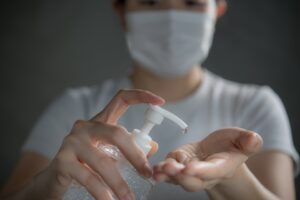
So, what’s the difference between cleaning and disinfecting? Firstly, cleaning refers to the removal of germs, dirt and other impurities from surfaces. It is important to remember that the process of cleaning does not kill germs, but rather it helps in reducing numbers and the risk of spreading infection. Secondly, disinfecting implies using chemical disinfectants registered by the United States Environmental Protection Agency (EPA) to kill germs on different surfaces. considering that many cleaners and disinfectants are harsh on the skin, it’s important to wear disposable gloves when using these kinds of products. Additionally, be sure to throw away the gloves after each use and immediately wash your hands.
“When reaching for an antimicrobial cleaning product, it’s important to consider that optimal effectiveness of disinfectants — typically a 99.9 percent reduction in particular pathogens—will only be achieved when used according to the label instructions,” warns Samara Geller, senior research and database analyst for the Environmental Working Group (EWG). “Too often, one or more key disinfection factors are overlooked by the user.”



















































































3 thoughts on “10 Things That Need to Be Cleaned After Returning Home from the Outside World”
I have read that regular detergent is sufficient to destroy COVID 19. No special soap nor bleach are necessary. Also, as with hand washing, it is the friction and not the actual soap that is instrumental in removing bacteria. Keep in mind that COVID 19 cannot survive temperatures over 80′.
Your hair should be covered as well as the eyes. You may want to use “gators” or “bandeaux”, which are a tube of fabric in a cotton knit that can be worn multiple ways; and goggles or if you wear glasses: “fit over” sunglasses/night vision glasses to prevent absorption via the lacrimal duct.
Finally, if you leave items in your car when you return home, I suspect the temperature inside a closed car sitting on the driveway in the sun exceeds the temperature that COVID19 can survive.
BTW: I am a retired nurse. Thank you.
What about men’s beards that hang down outside their masks?
I wash my grocery after I get back home. Then I use the plastic bags in my small trash can. Is this safe?